
Module 8: Getting Your First Job
Key points
Get your first security job: proof of skills, English and Japanese CVs, where to find jobs in Japan, the hiring process, interviews and your first 90 days.
Free course · Start Your Cybersecurity Career · Module 8 of 8 · About 20 minutes
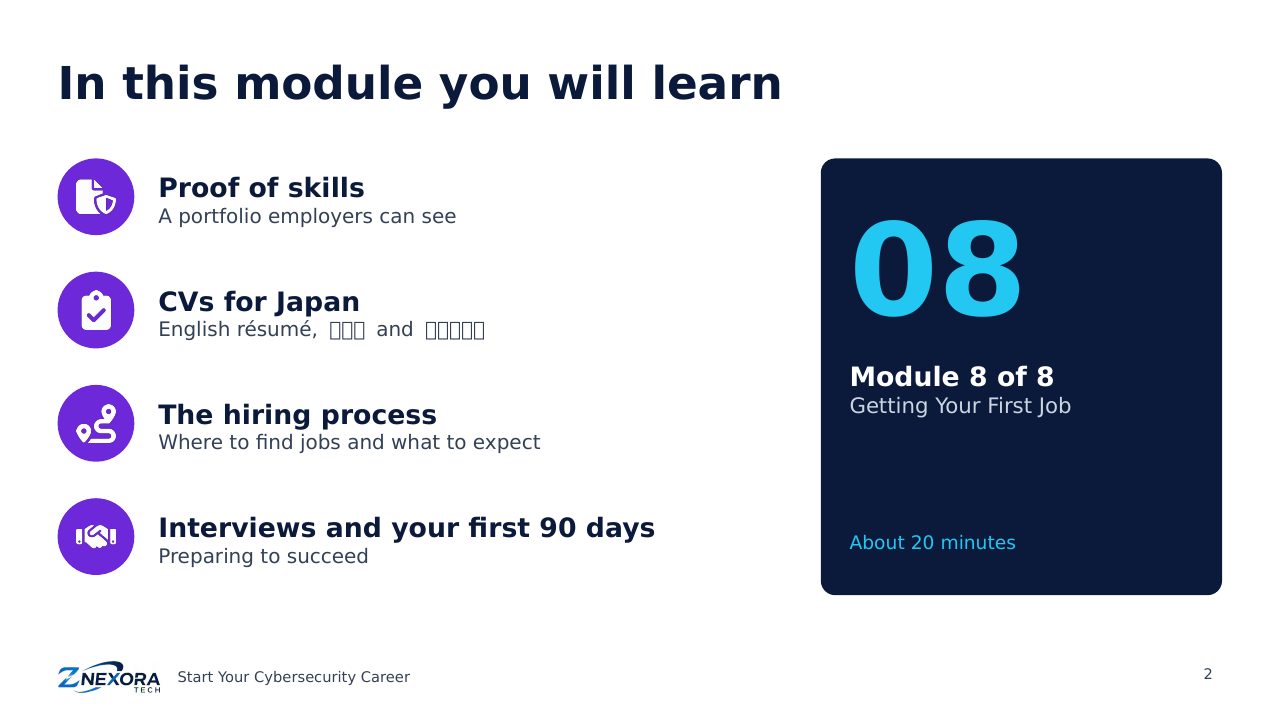
This final module brings everything together: how to prove your skills without job experience, how to prepare CVs for Japanese and international employers, where to find security jobs in Japan, what the hiring process looks like, how to prepare for interviews, and how to make a strong start in your first 90 days.
Build proof of your skills
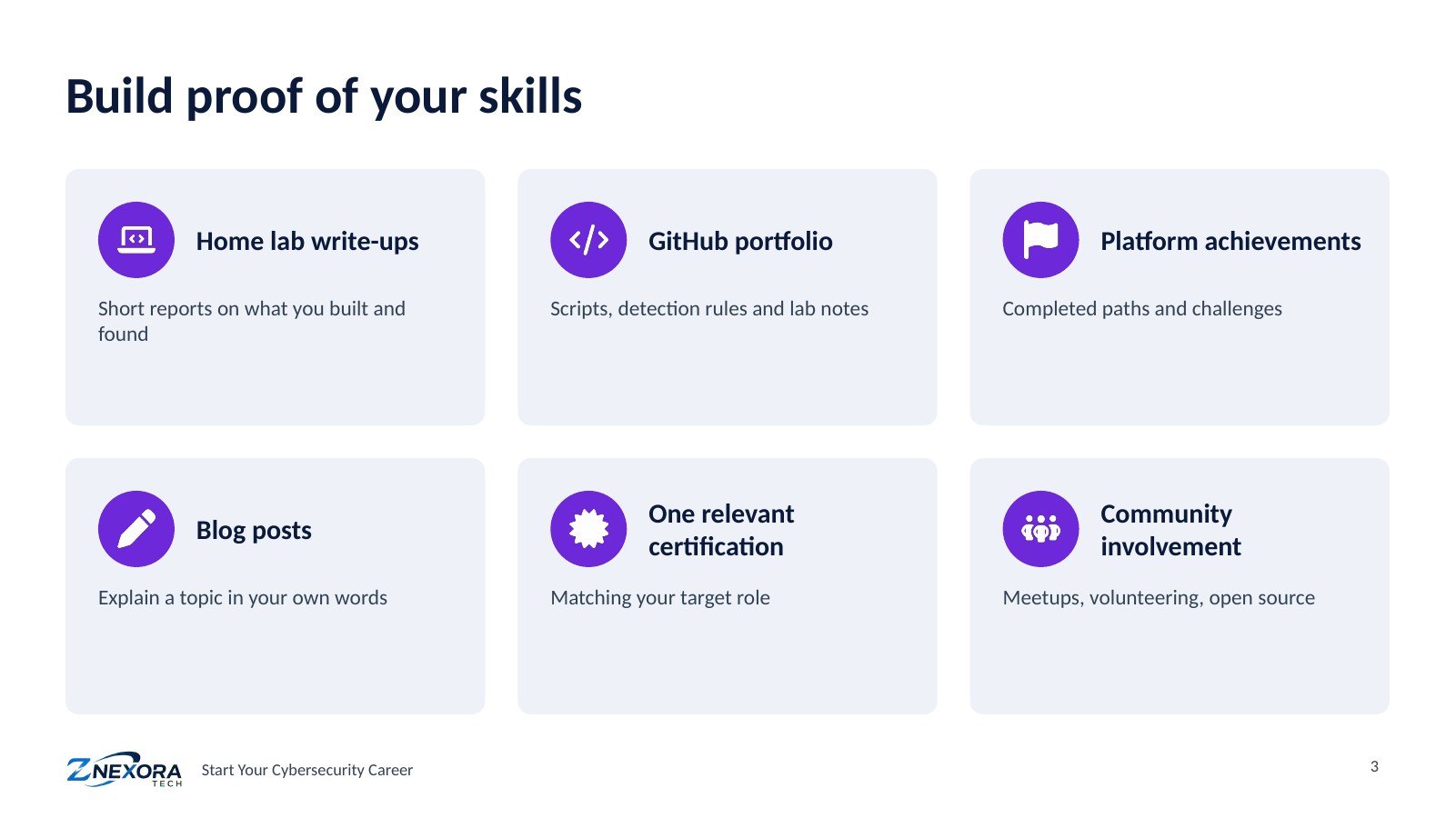
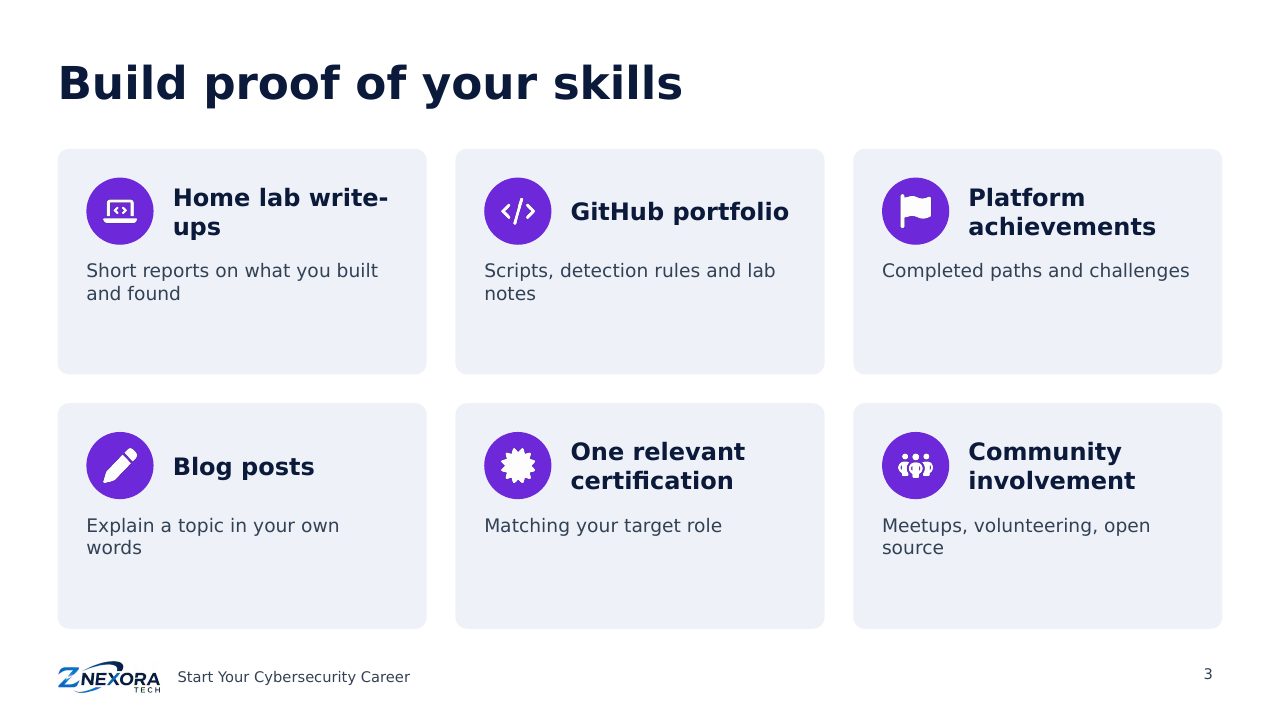
Employers want evidence you can do the work. Without job experience, build it yourself:
- Home lab write-ups: short reports on what you built, tested and learned (Module 5).
- A GitHub portfolio: scripts, detection rules and lab notes.
- Platform achievements: completed learning paths and challenges.
- Blog posts: explaining a topic in your own words shows understanding and communication.
- One relevant certification that matches your target role (Module 6).
- Community involvement: meetups, volunteering and open-source contributions.
English résumé versus Japanese CV
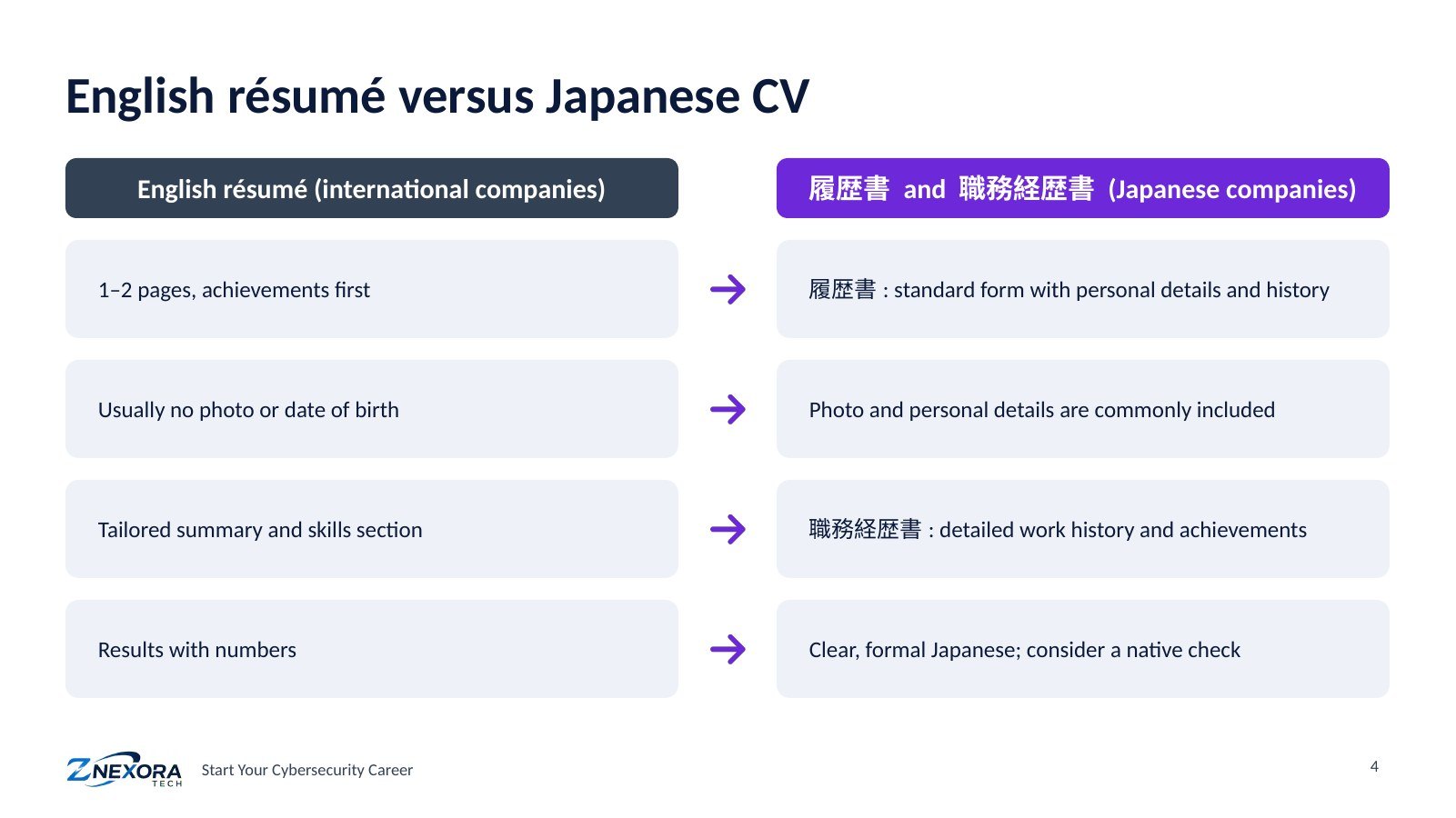
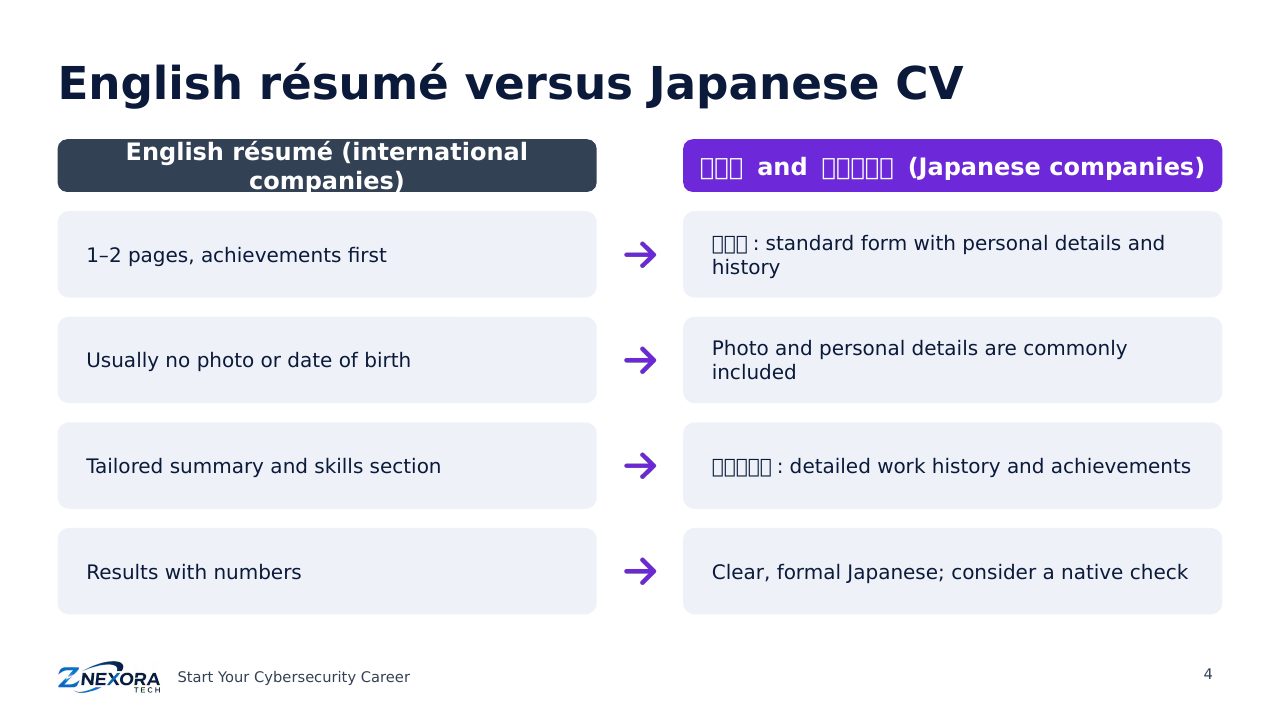
International companies in Japan usually expect an English résumé: one or two pages, achievements first, a tailored summary and skills section, and results with numbers. It usually does not include a photo or date of birth.
Many Japanese companies expect two documents:
- 履歴書 (rirekisho): a standard form with personal details, education and work history, commonly including a photo.
- 職務経歴書 (shokumu keirekisho): a detailed description of your work experience, responsibilities and achievements.
Write them in clear, formal Japanese, and ask a native speaker to check them if possible.
Where to find security jobs in Japan
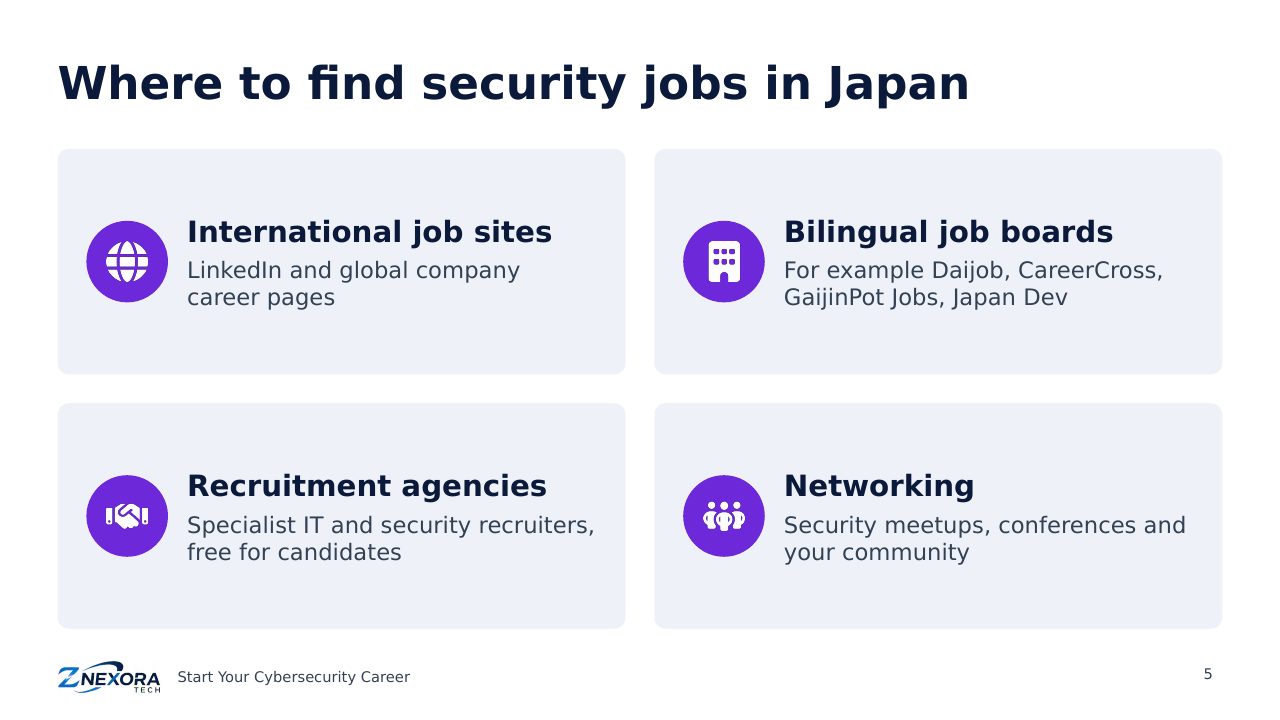
- International job sites: LinkedIn and the career pages of global companies.
- Bilingual job boards: for example Daijob, CareerCross, GaijinPot Jobs and Japan Dev.
- Recruitment agencies: specialist IT and security recruiters, usually free for candidates because employers pay them.
- Networking: security meetups, conferences and your own community.
Language matters. Many Japanese companies ask for business-level Japanese (often around JLPT N2), while international companies may hire in English. Requirements vary widely, so read each job post carefully.
A typical Japanese hiring process
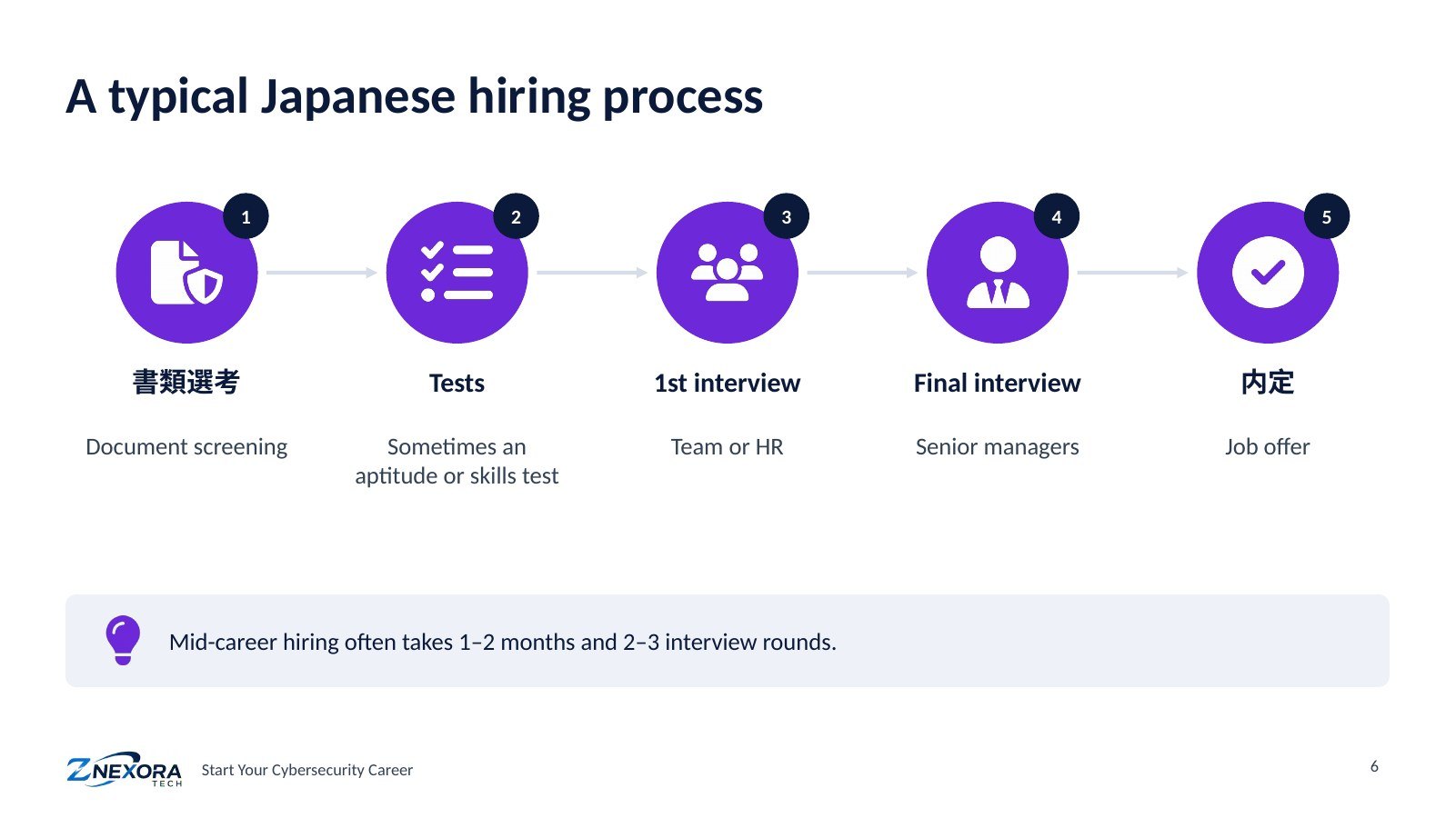
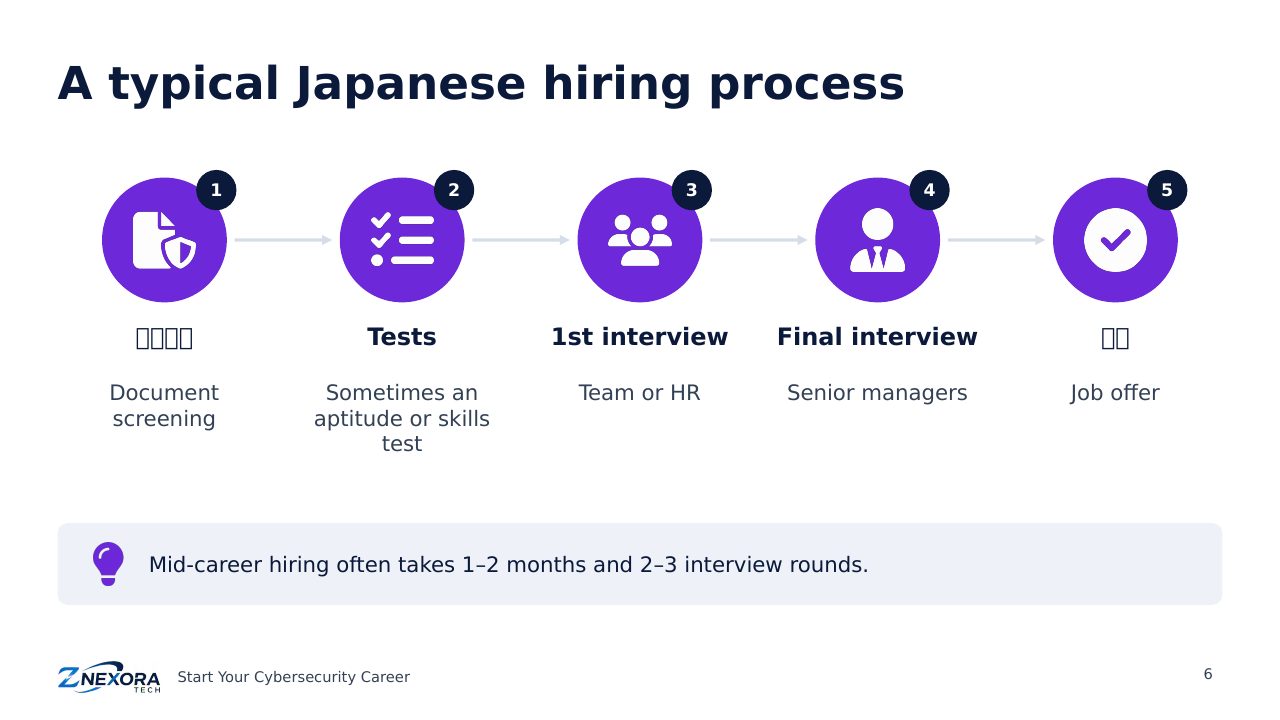
- 書類選考 (document screening): your CV is reviewed.
- Tests: some companies use an aptitude or skills test, especially for new graduates.
- First interview: often with the team or HR.
- Final interview: with senior managers, focused on fit and motivation.
- 内定 (job offer): you receive an informal offer, followed by the employment contract.
Mid-career hiring often takes one to two months, with two or three interview rounds. If you need a work visa, employers usually support the application; ask an immigration professional for advice on your situation.
Common interview questions
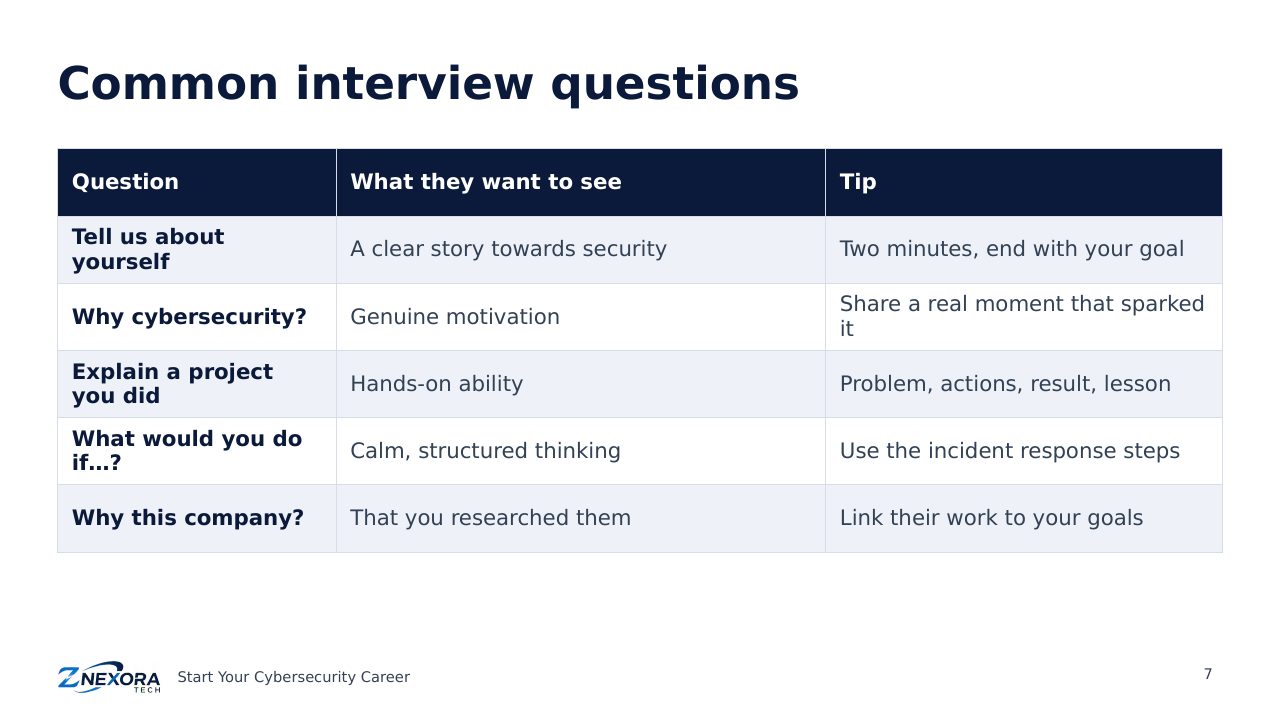
- “Tell us about yourself”: a clear two-minute story leading to your security goal.
- “Why cybersecurity?”: genuine motivation, ideally a real moment that sparked your interest.
- “Explain a project you did”: use problem, actions, result and lesson.
- “What would you do if…?”: calm, structured thinking, using the incident response steps from Module 3.
- “Why this company?”: show you researched them and link their work to your goals.
Your first 90 days
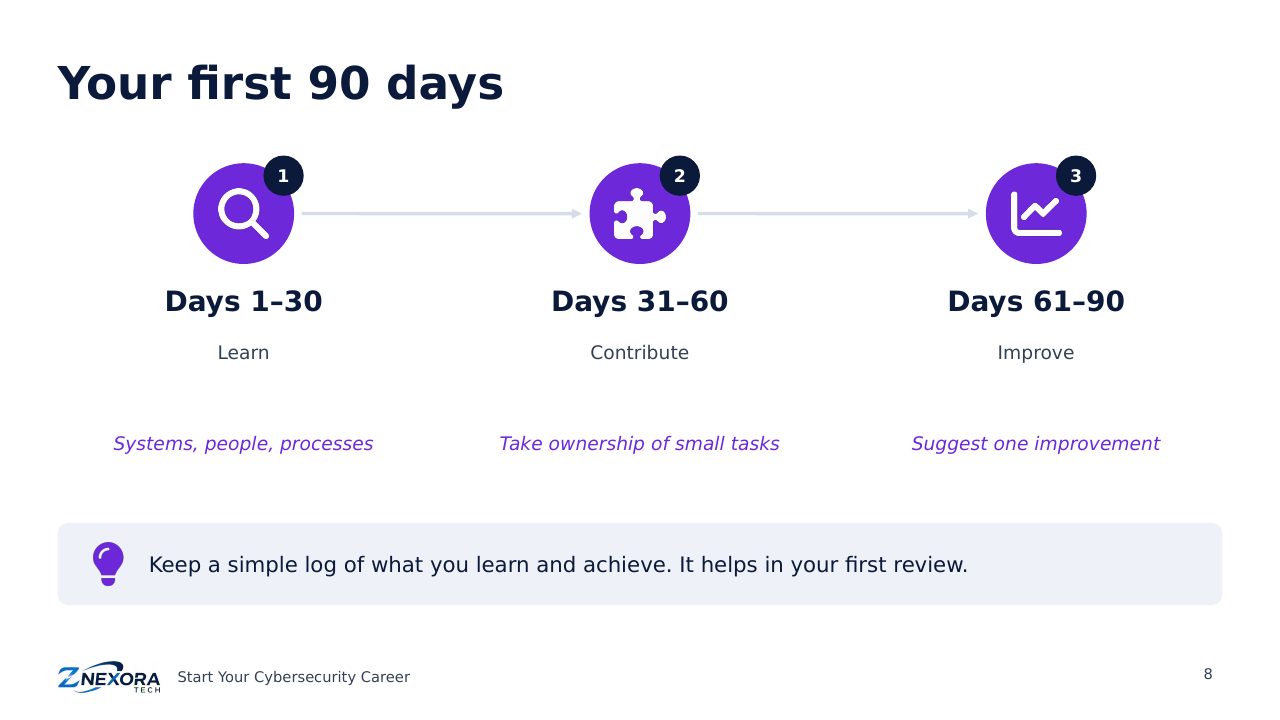
- Days 1–30, learn: understand the systems, people and processes.
- Days 31–60, contribute: take ownership of small tasks.
- Days 61–90, improve: suggest one well-researched improvement.
Keep a simple log of what you learn and achieve. It helps you in your first performance review.
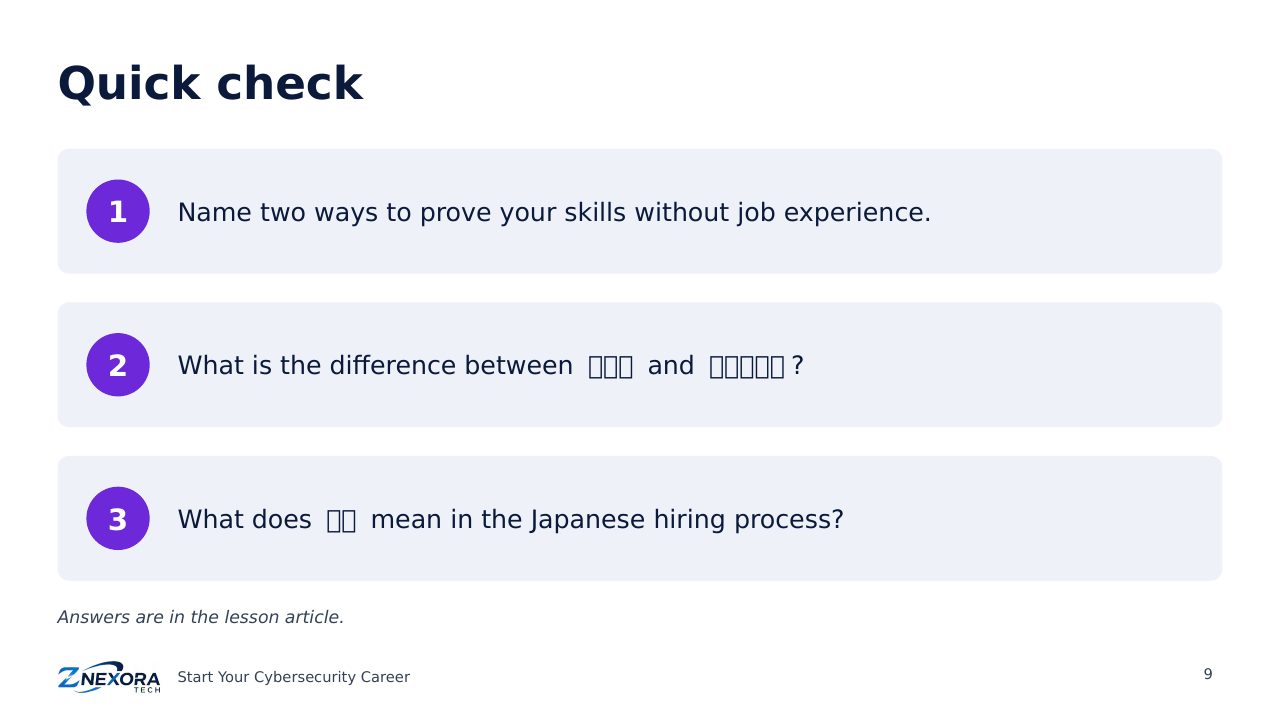
Quick check
- Name two ways to prove your skills without job experience.
- What is the difference between 履歴書 and 職務経歴書?
- What does 内定 mean in the Japanese hiring process?
Answers: 1. For example home lab write-ups, a GitHub portfolio, blog posts or platform achievements. 2. 履歴書 is a standard form with personal details and history; 職務経歴書 describes your work experience and achievements in detail. 3. A job offer.
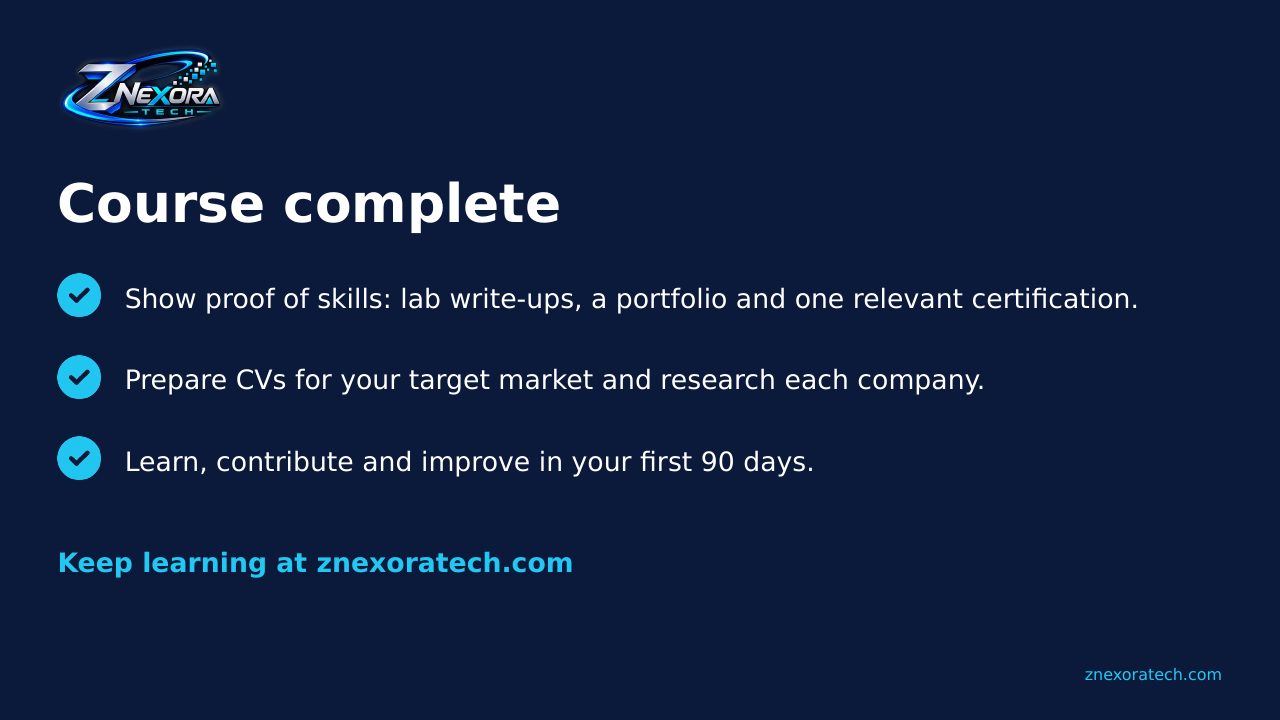
Course complete
Congratulations on finishing Start Your Cybersecurity Career. You now understand what cybersecurity is, how attacks and defences work, which roles exist, the skills and certifications to build, the frameworks employers use, and how to get your first job.
- Show proof of skills: lab write-ups, a portfolio and one relevant certification.
- Prepare CVs for your target market and research each company.
- Learn, contribute and improve in your first 90 days.
Keep learning with new articles, training and cheat sheets at znexoratech.com, and follow ZNexora Tech on social media for weekly updates.
Slides
Thank you for reading!
Let’s continue to build a safer and more trustworthy digital future together.
Follow ZNexora Tech
Stay curious. Stay secure. Stay ahead.