

Module 4: Careers and Roles in Cybersecurity
Key points
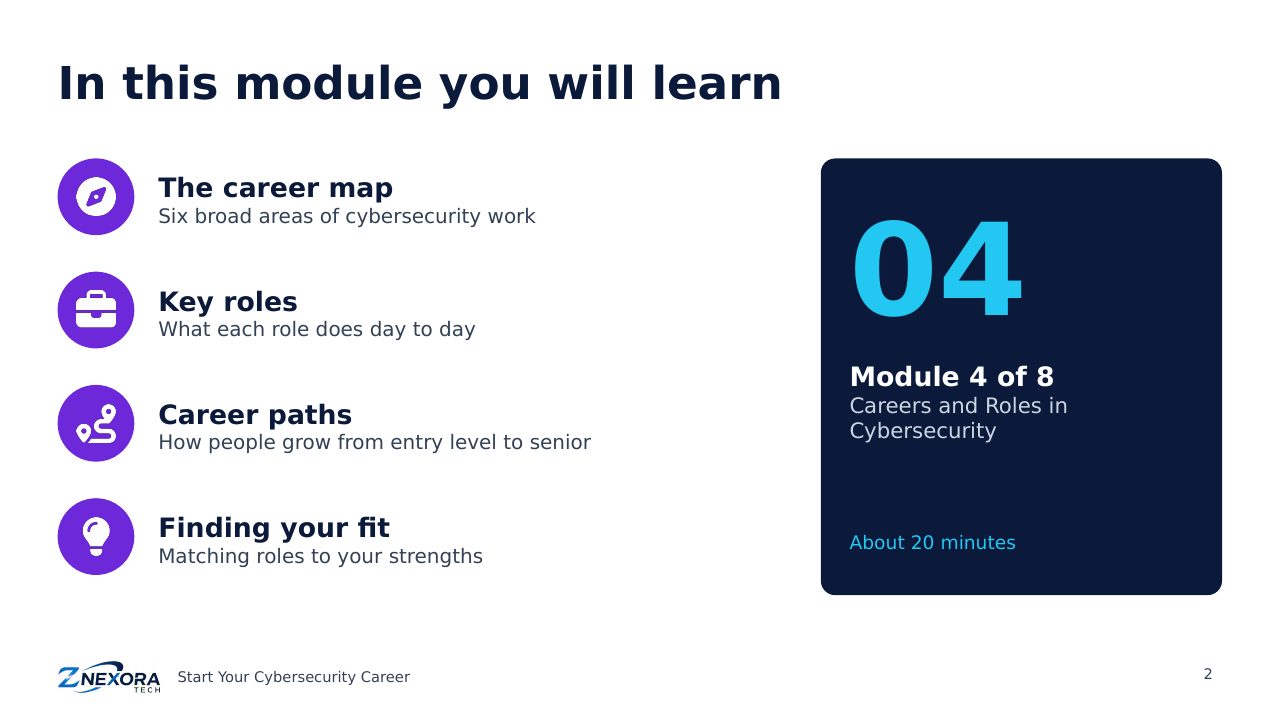
Explore the main cybersecurity careers: six areas of work, what key roles do day to day, how careers grow, and how to find the role that fits you.
Free course · Start Your Cybersecurity Career · Module 4 of 8 · About 20 minutes
Cybersecurity is not one job but a whole family of careers. Some roles are deeply technical, others focus on analysis, risk or communication. This module maps the main areas, explains what key roles do, shows how careers usually grow, and helps you think about which path fits you.
The cybersecurity career map
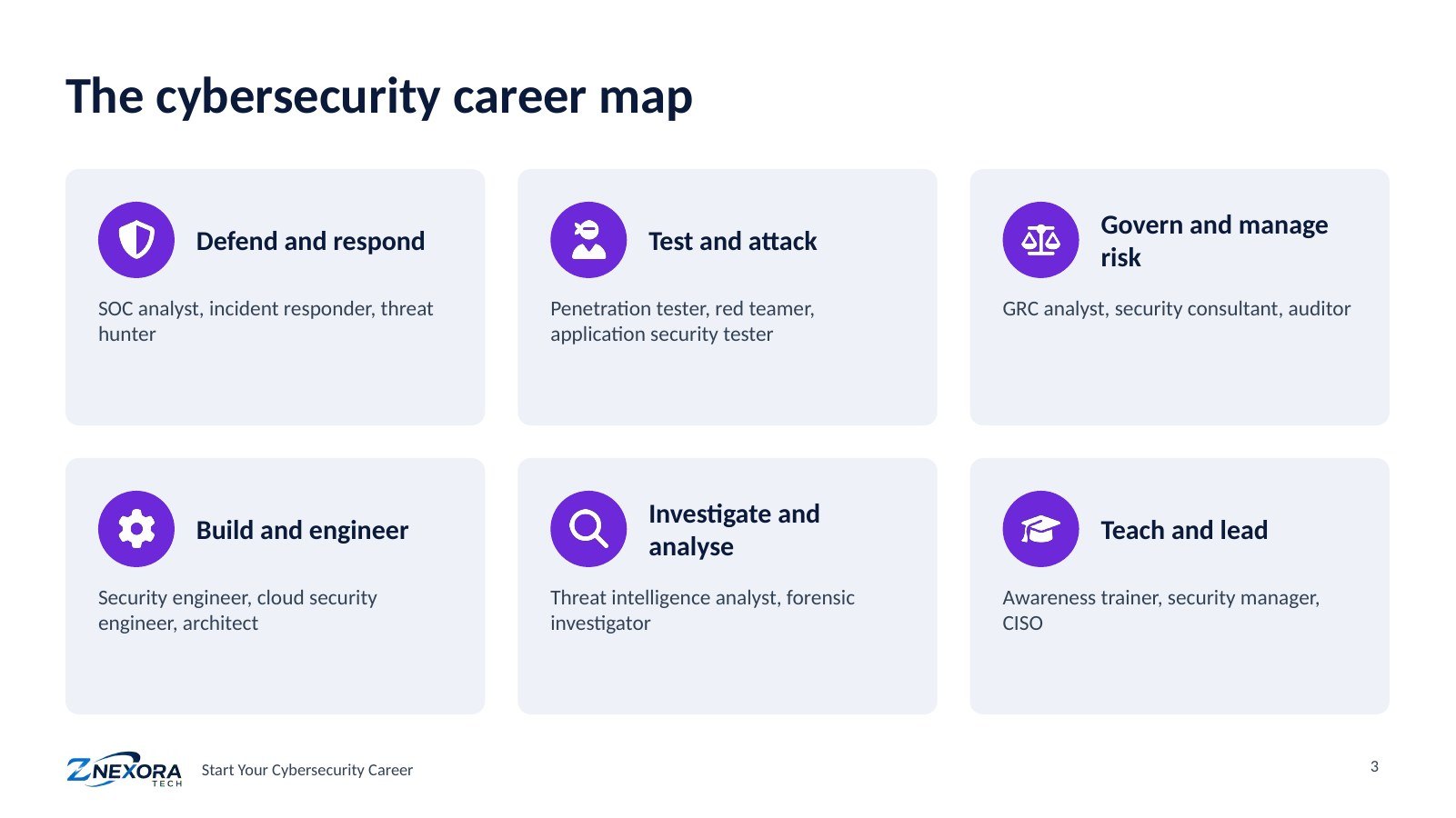
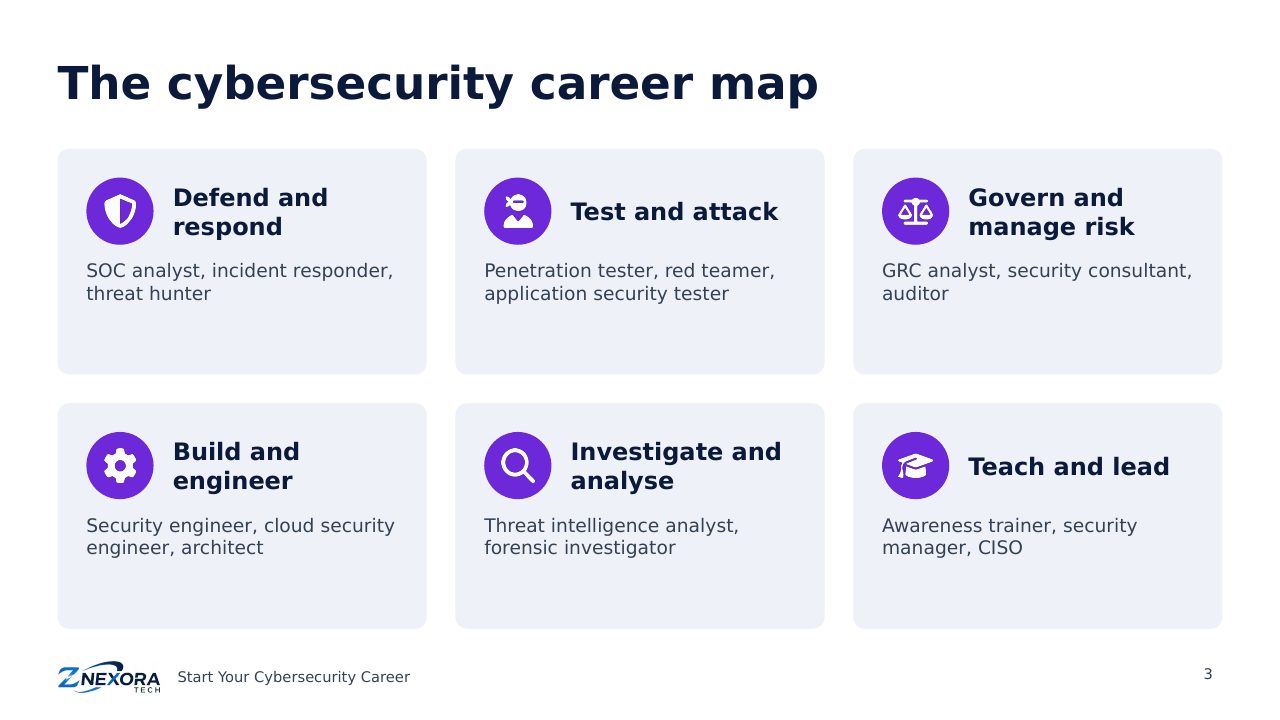
Most security jobs fall into six broad areas:
- Defend and respond: SOC analysts, incident responders and threat hunters protect organisations day and night.
- Test and attack: penetration testers and red teamers legally attack systems to find weaknesses first.
- Govern and manage risk: GRC (governance, risk and compliance) analysts, consultants and auditors make sure security is planned, measured and meets standards.
- Build and engineer: security and cloud security engineers and architects design and run protective systems.
- Investigate and analyse: threat intelligence analysts and forensic investigators study attackers and evidence.
- Teach and lead: awareness trainers, security managers and CISOs (Chief Information Security Officers) guide people and strategy.
Key roles at a glance
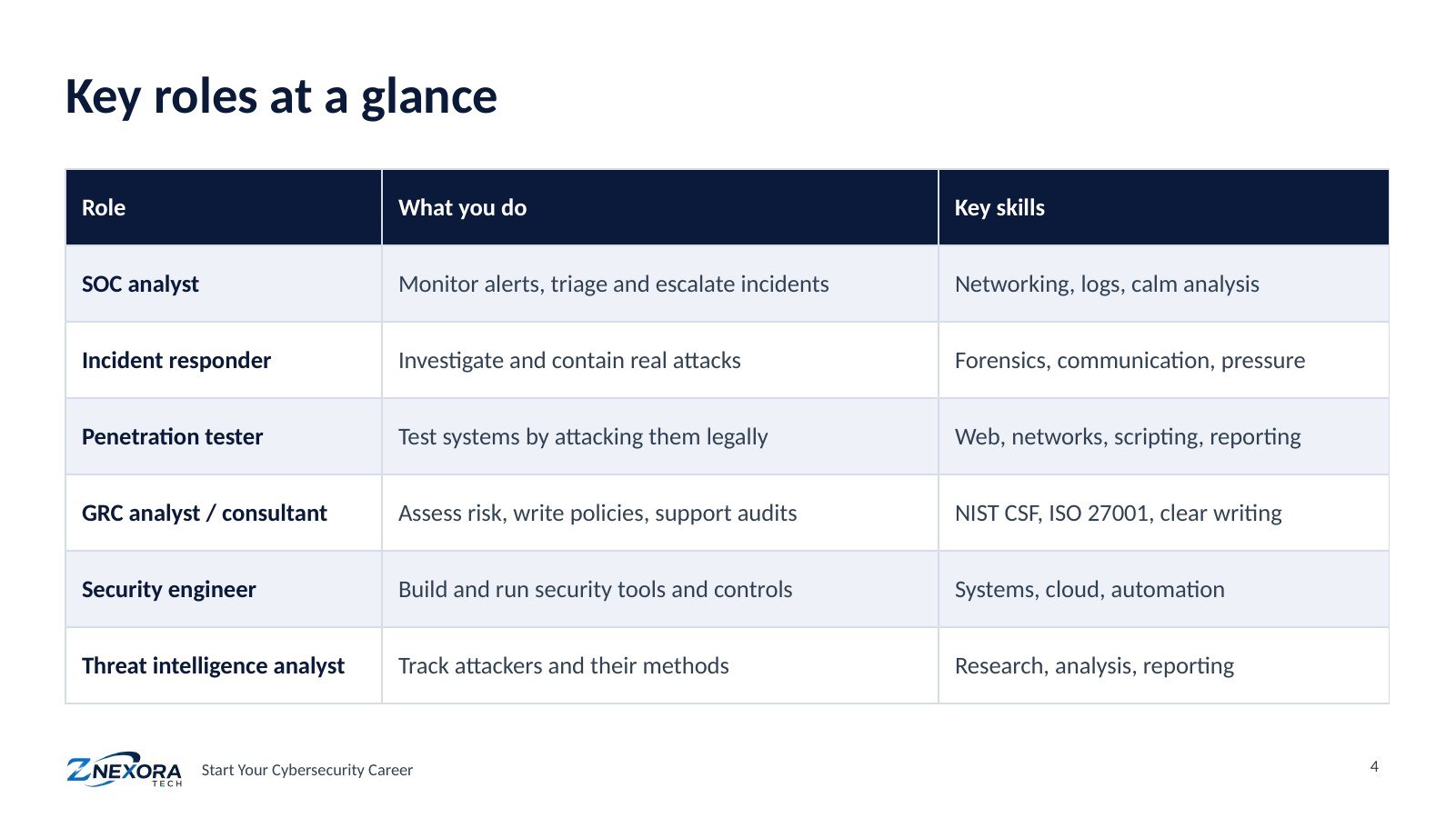
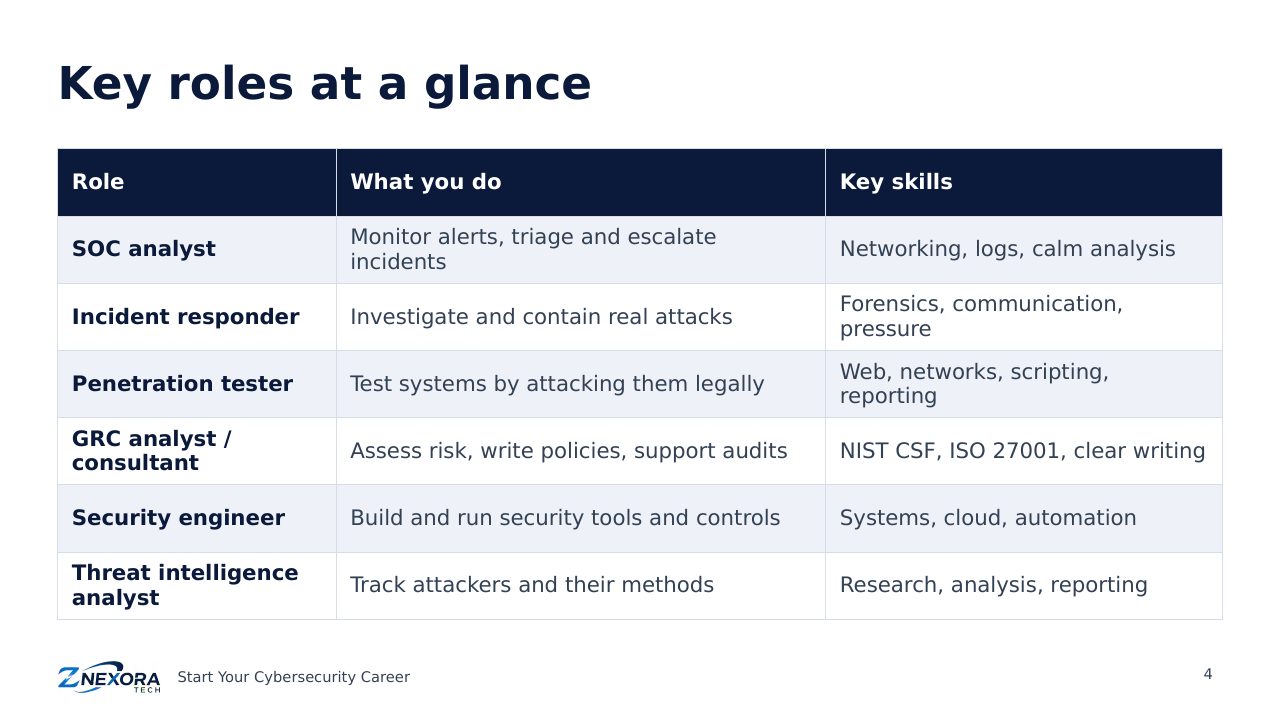
- SOC analyst: monitors alerts, decides which are real, and escalates incidents. Needs networking knowledge, log analysis and a calm approach.
- Incident responder: investigates and contains real attacks. Needs forensic skills and clear communication under pressure.
- Penetration tester: tests systems by attacking them, with permission, and reports how to fix the weaknesses. Needs web and network knowledge, scripting and strong report writing.
- GRC analyst or security consultant: assesses risk, writes policies and supports audits using frameworks such as NIST CSF and ISO 27001. Needs structured thinking and clear writing.
- Security engineer: builds and runs security tools and controls, often in the cloud. Needs systems knowledge and automation skills.
- Threat intelligence analyst: tracks attacker groups and their methods. Needs research, analysis and reporting skills.
A day in the life
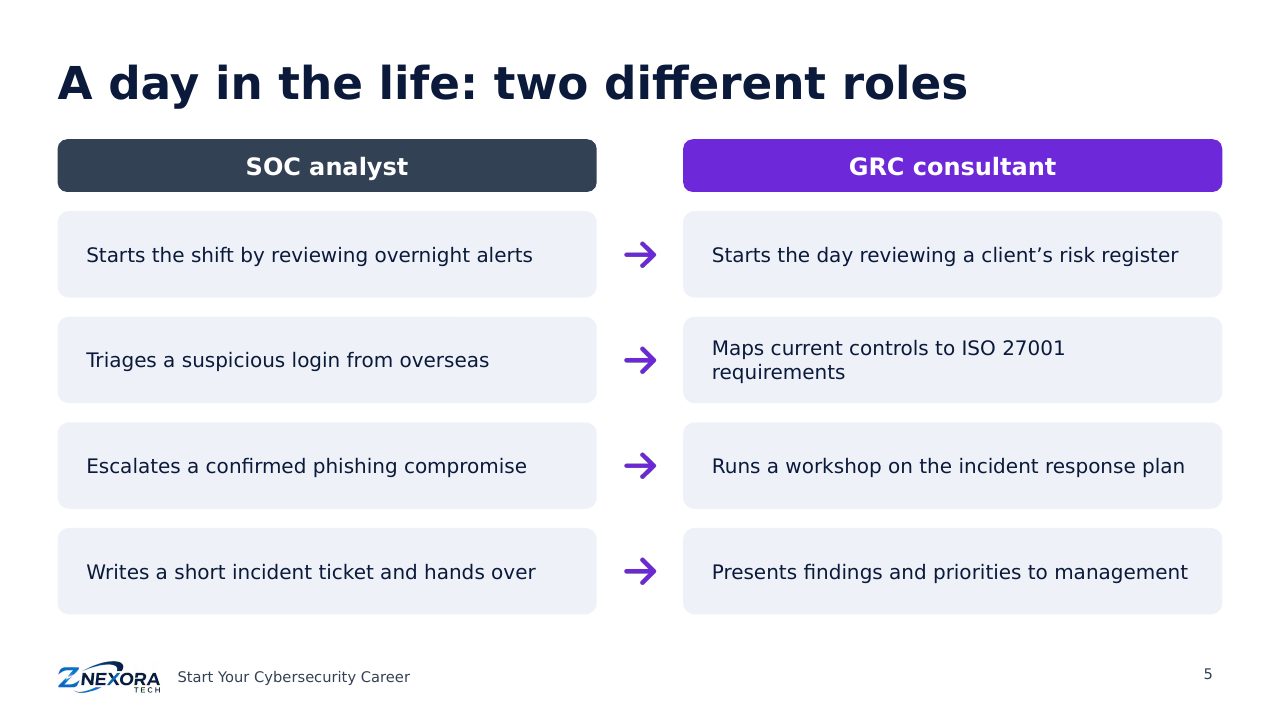
Two roles can feel completely different. A SOC analyst might start a shift reviewing overnight alerts, investigate a suspicious login from overseas, escalate a confirmed phishing compromise, and hand over with a short incident ticket. A GRC consultant might review a client’s risk register, map existing controls to ISO 27001 requirements, run a workshop on the incident response plan, and present priorities to management.
Both protect organisations. One works close to live attacks; the other shapes how the whole organisation manages security.
How careers grow
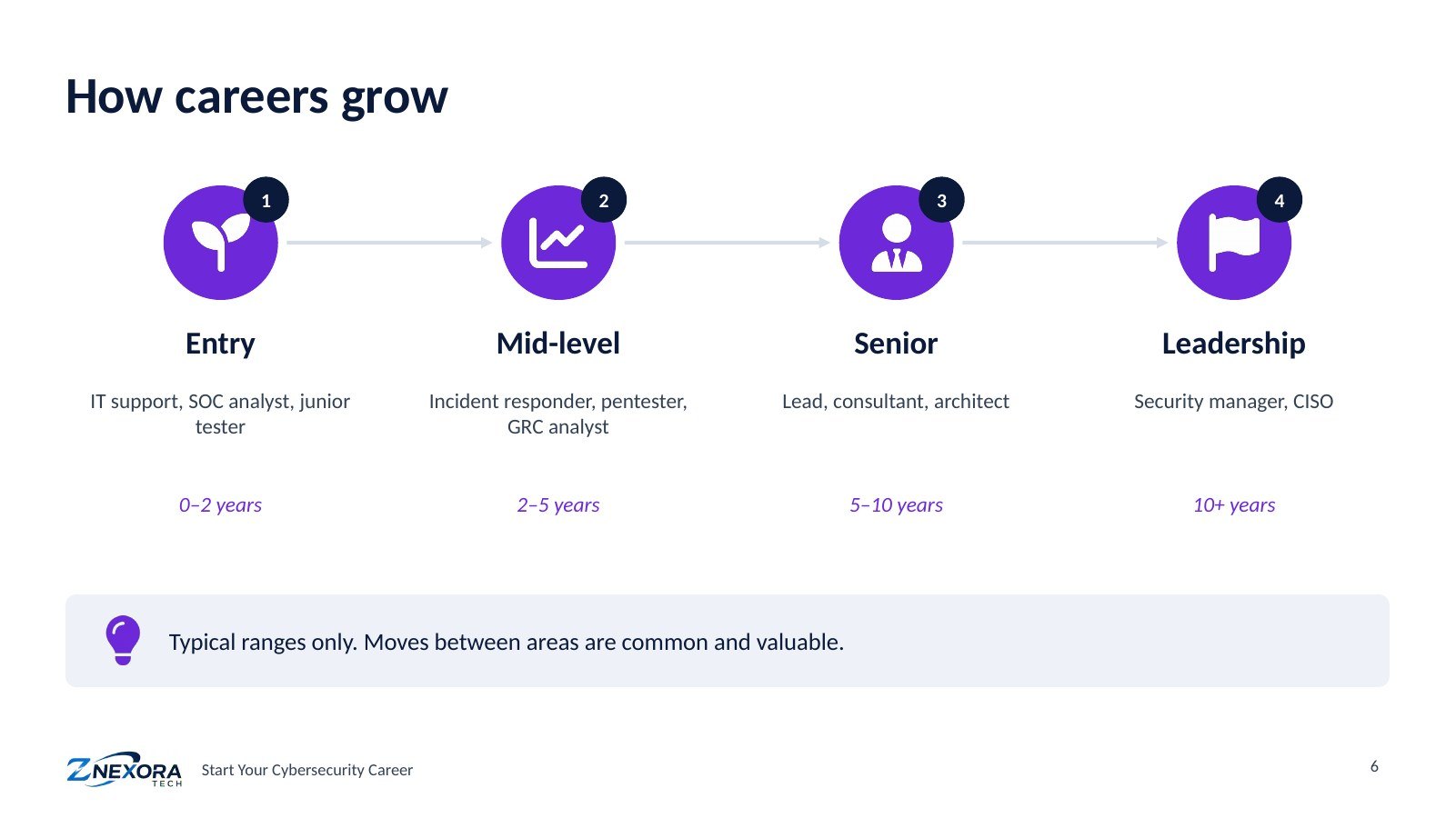
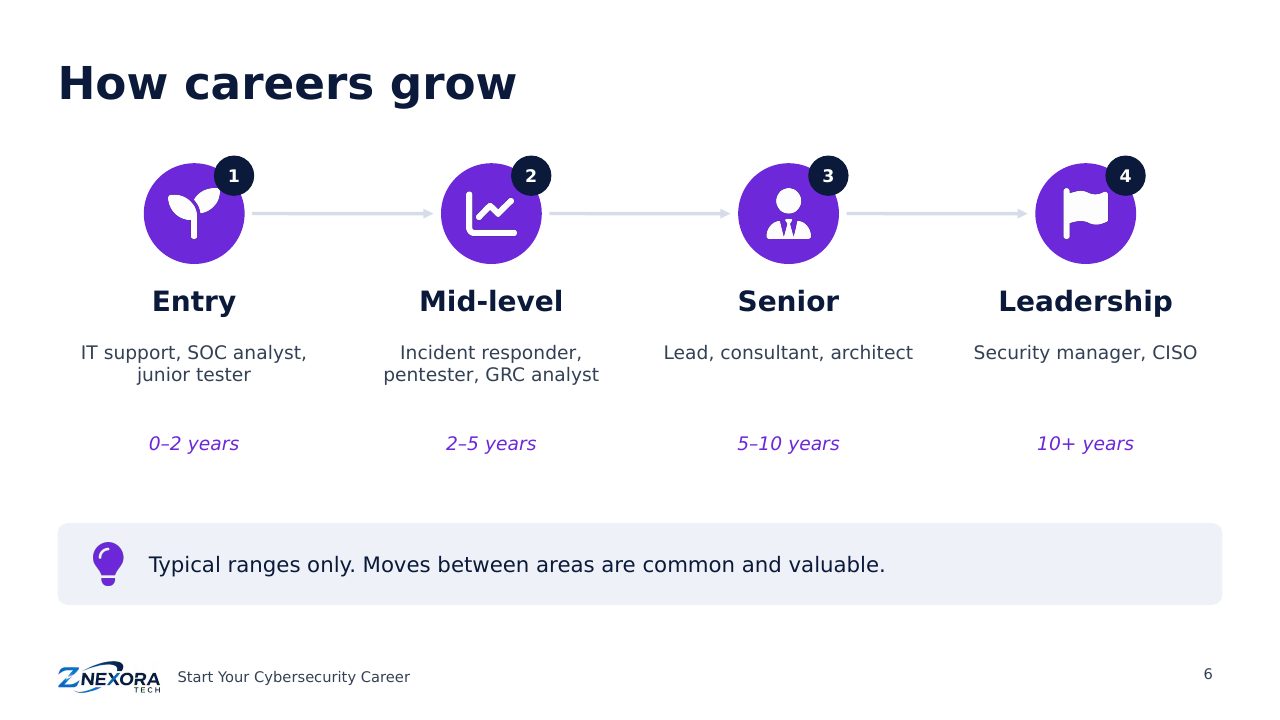
A typical path moves through four stages, although timelines vary widely:
- Entry (about 0–2 years): IT support, SOC analyst or junior tester roles build the foundations.
- Mid-level (about 2–5 years): incident responder, penetration tester or GRC analyst roles add depth.
- Senior (about 5–10 years): lead, consultant or architect roles add responsibility and strategy.
- Leadership (10+ years): security manager or CISO roles focus on people, budgets and business risk.
Moving between areas is common and valuable. Experience in operations, testing and governance together makes a professional far stronger than experience in only one.
Which role fits you?
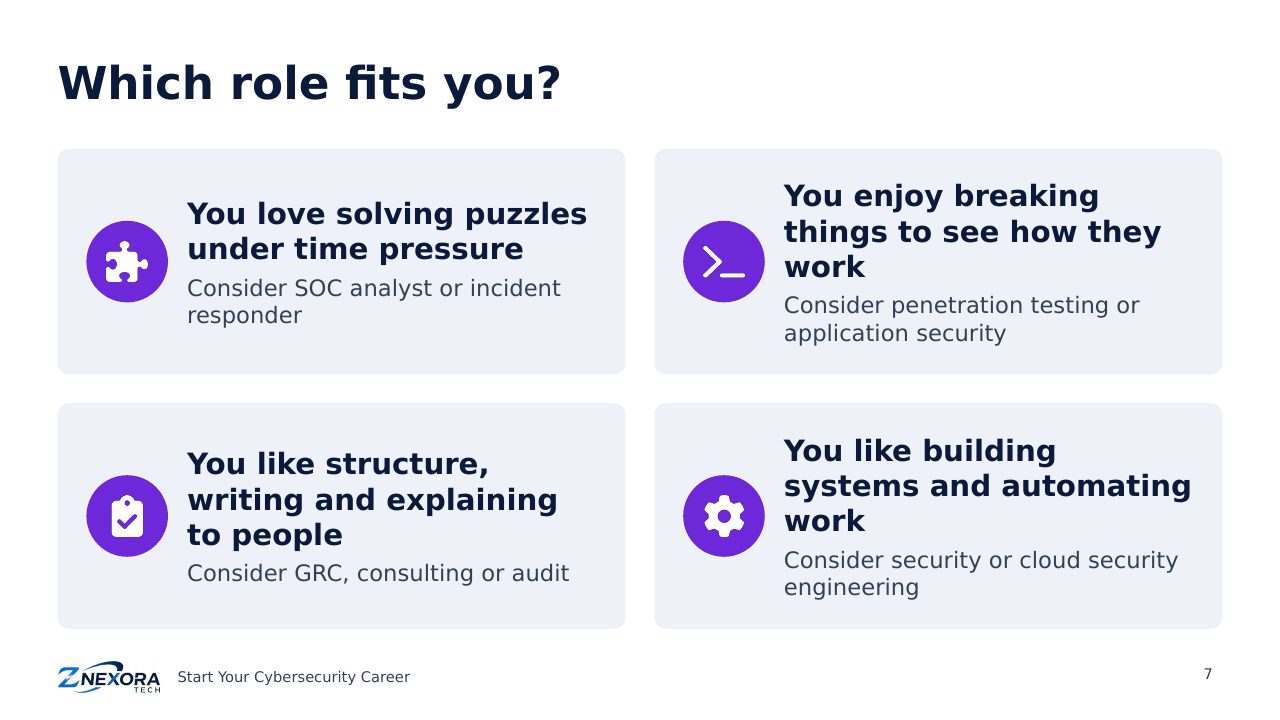
- If you love solving puzzles under time pressure, consider SOC analyst or incident responder.
- If you enjoy breaking things to see how they work, consider penetration testing or application security.
- If you like structure, writing and explaining to people, consider GRC, consulting or audit.
- If you like building systems and automating work, consider security or cloud security engineering.
You do not need to choose forever. Pick a direction for the next one to two years, then adjust as you learn what you enjoy.
Quick check
- Which role monitors alerts and triages incidents?
- Which area of security focuses on risk, policies and audits?
- Name one common entry-level role in cybersecurity.
Answers: 1. SOC analyst. 2. Governance, risk and compliance (GRC). 3. For example IT support, SOC analyst or junior penetration tester.
Key takeaways
- Cybersecurity has room for many strengths: technical, analytical and people skills.
- Common entry points include IT support, SOC analyst and junior tester roles.
- Choose a direction, then build skills and certifications step by step.
Coming next: the skills you need, which certifications to choose and in what order, frameworks made simple, and how to get your first job, including in Japan.
Slides
Thank you for reading!
Let’s continue to build a safer and more trustworthy digital future together.
Follow ZNexora Tech
Stay curious. Stay secure. Stay ahead.