
Module 1: What Is Cybersecurity?
Key points
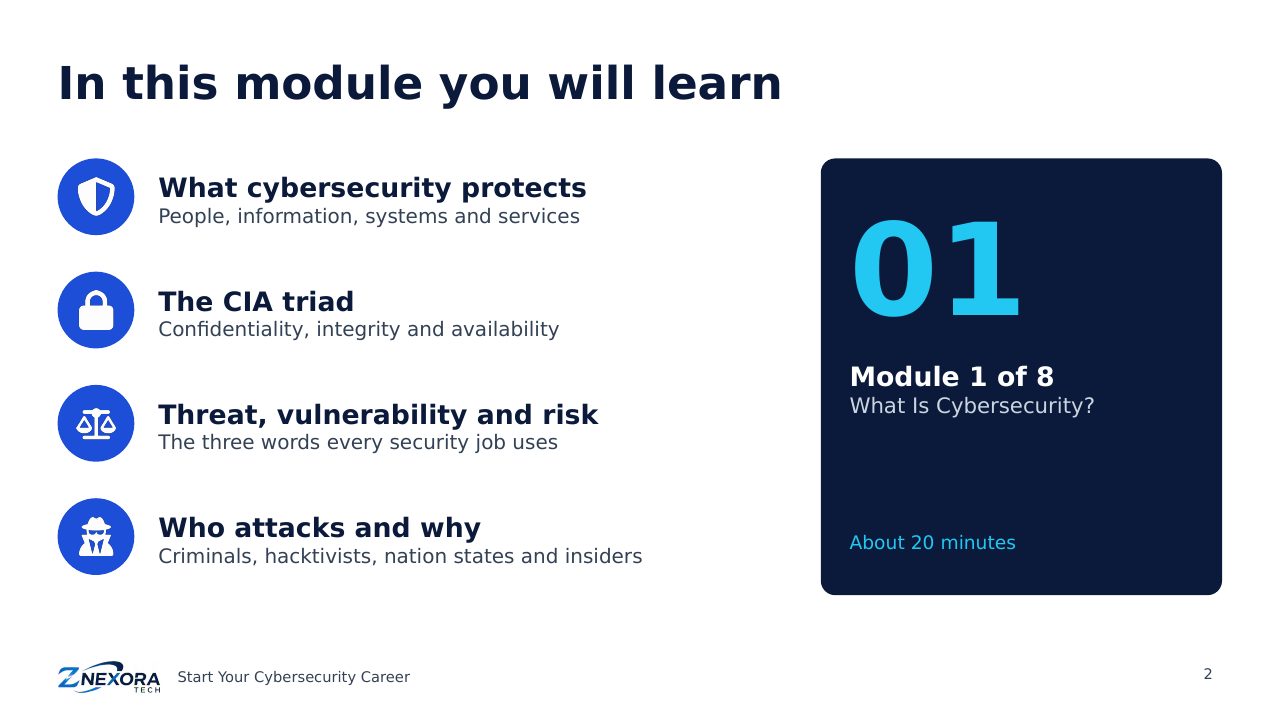
Learn what cybersecurity protects, the CIA triad, the difference between threats, vulnerabilities and risk, and who attacks organisations and why.
Free course · Start Your Cybersecurity Career · Module 1 of 8 · About 20 minutes
Cybersecurity is the practice of protecting people, information, systems and services from harm in the digital world. This first module explains what security protects, the three goals behind every security decision, and who attacks organisations and why.
If you are planning a career in cybersecurity, these ideas are the foundation for everything that follows. You will hear them in every job interview, every certification and every security meeting.
Why cybersecurity matters
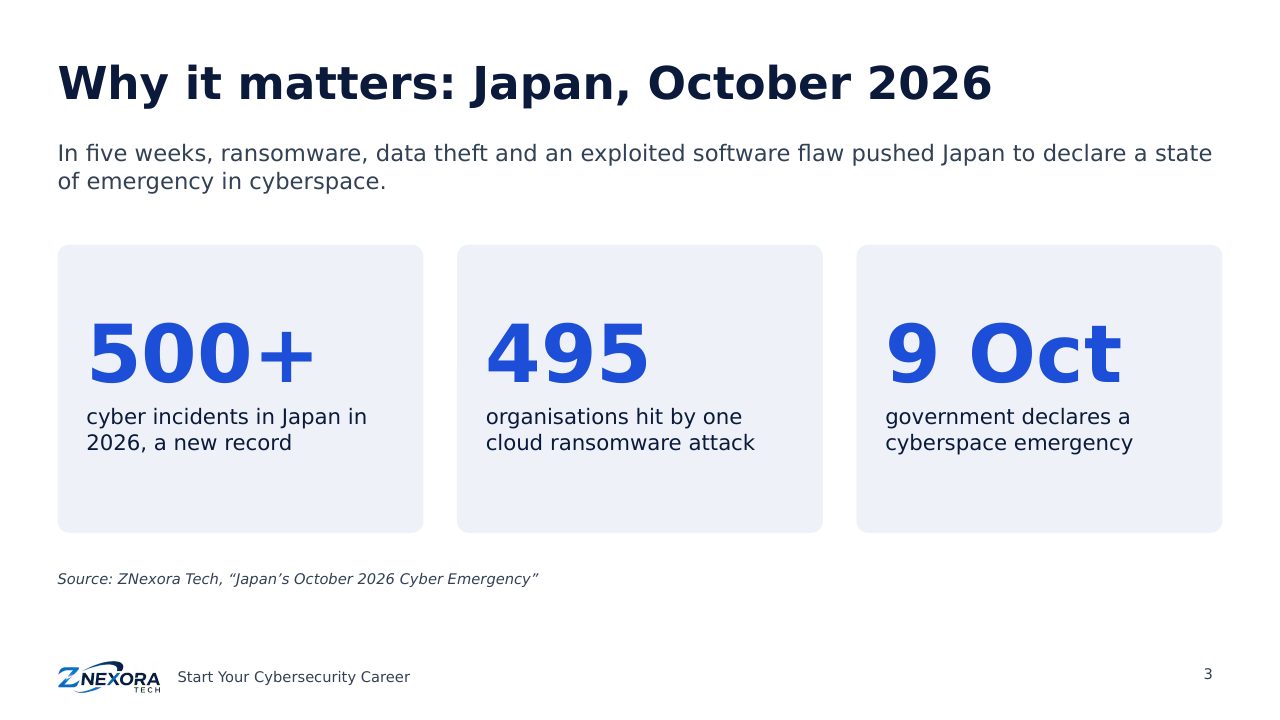
Japan’s autumn of 2026 showed how much is at stake. In about five weeks, ransomware took down a university and a major cloud provider, dozens of companies disclosed data breaches, and attackers exploited a serious software flaw before a fix existed. The government declared a state of emergency in cyberspace on 9 October.
Behind those headlines were real consequences: cancelled services, leaked personal data, and organisations unable to work for days. Cybersecurity professionals exist to prevent this, and to respond quickly when it happens.
What cybersecurity protects
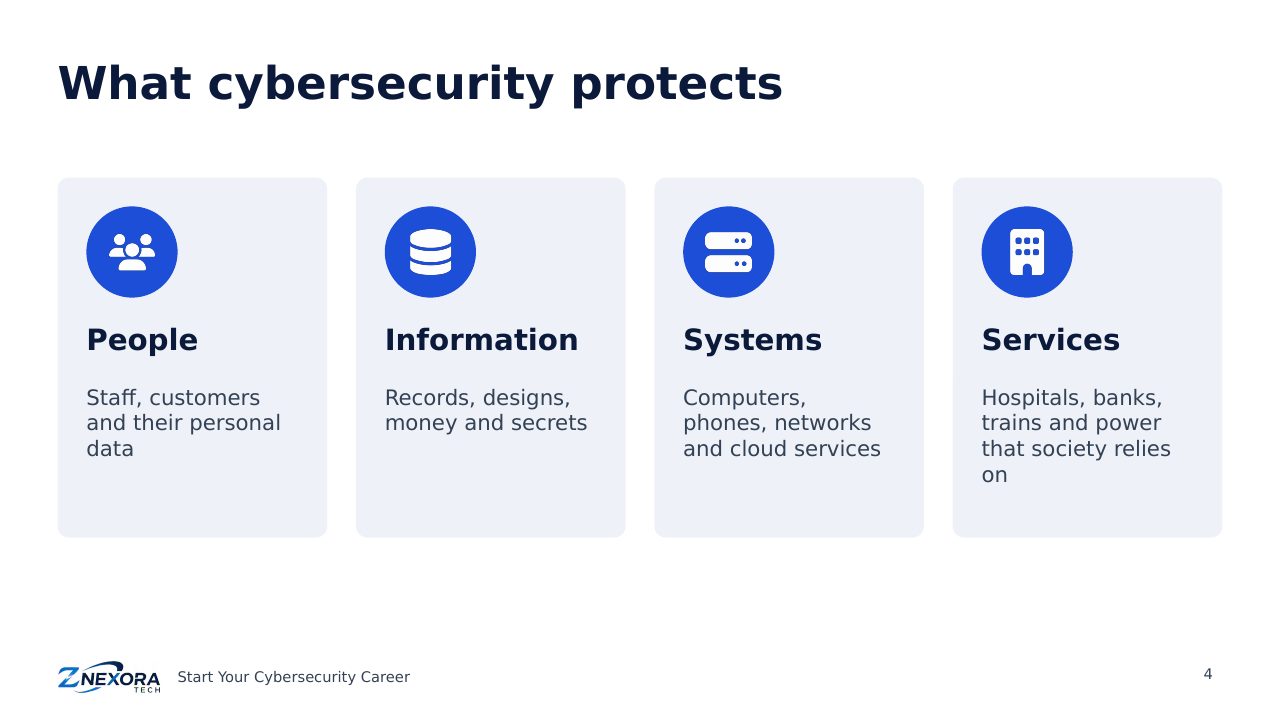
It is easy to think security is only about computers. In practice it protects four things:
- People: staff, customers and their personal data.
- Information: records, designs, money and business secrets.
- Systems: computers, phones, networks and cloud services.
- Services: the hospitals, banks, trains and power networks that society relies on.
The CIA triad: three goals of security
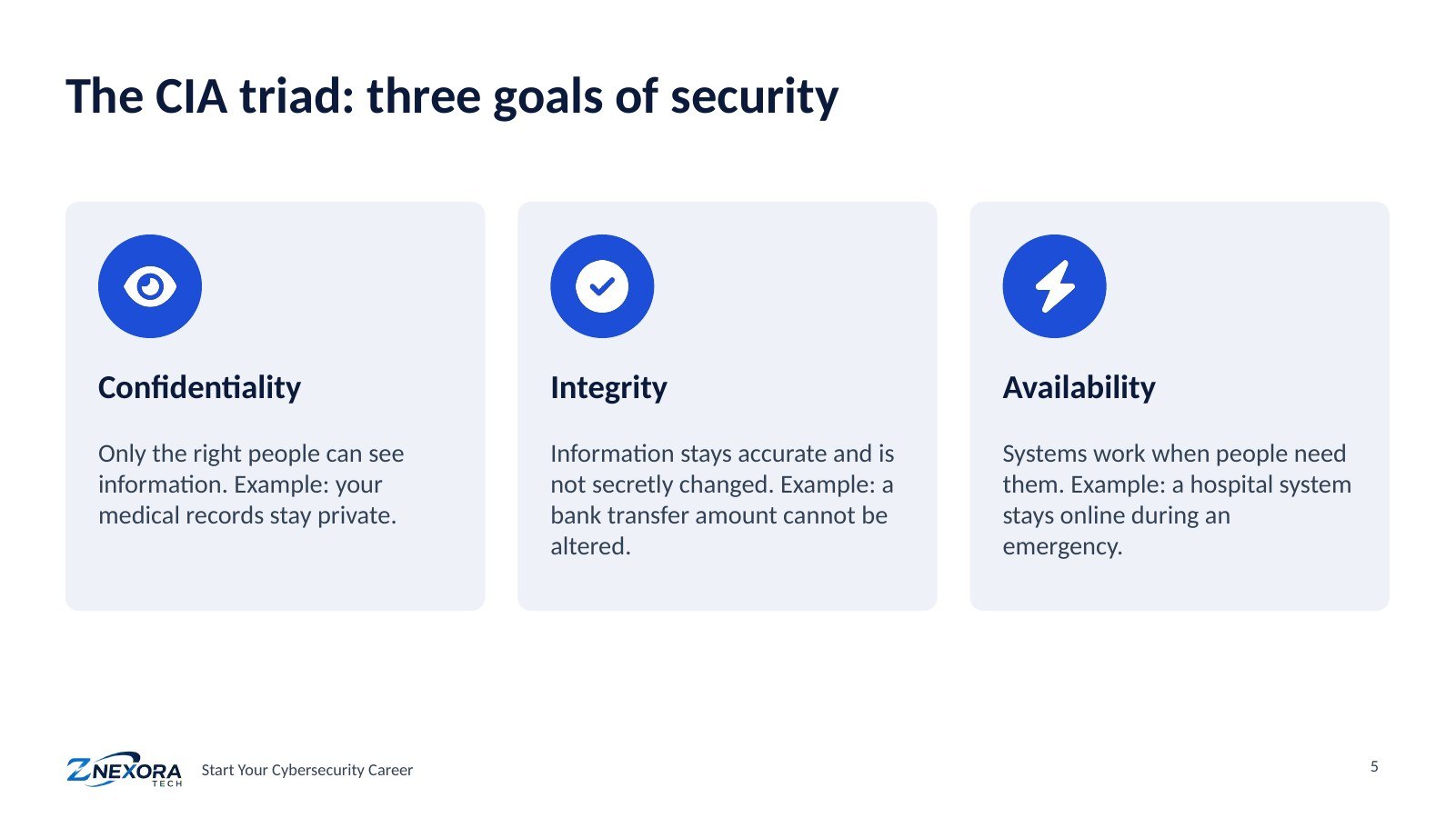
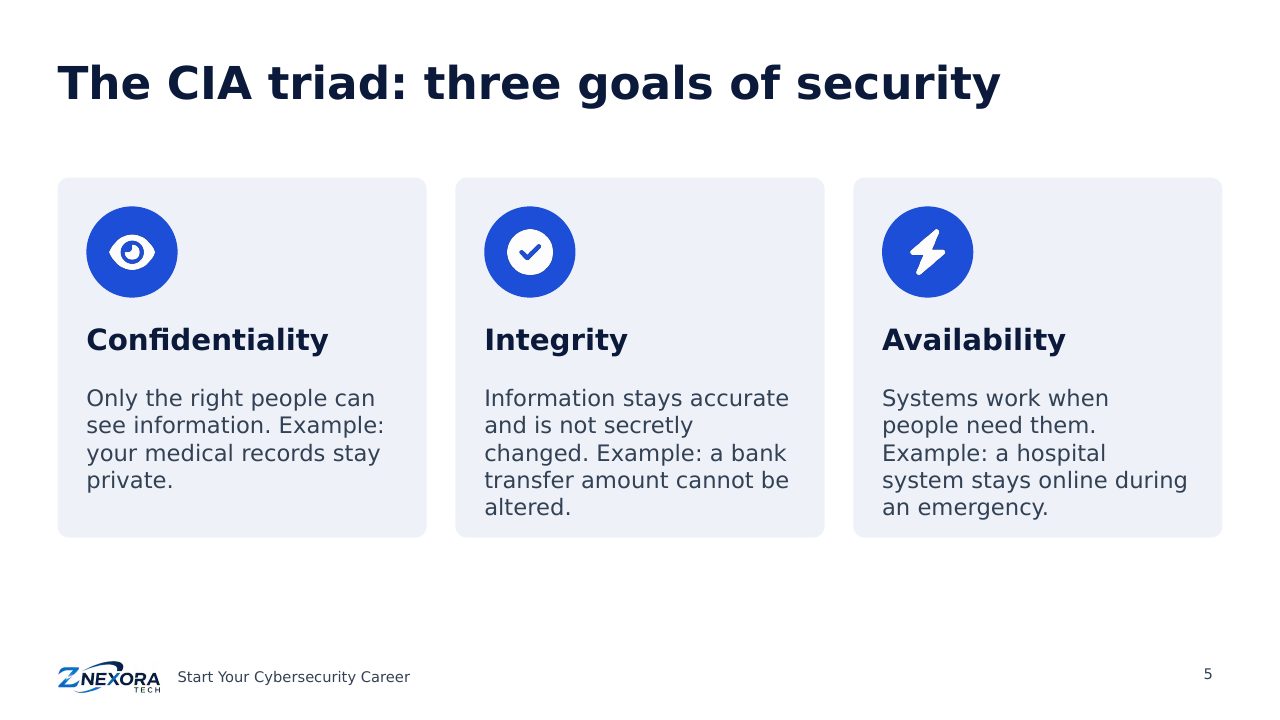
Almost every security decision supports one of three goals, known together as the CIA triad (nothing to do with the intelligence agency):
- Confidentiality: only the right people can see information. Encryption and access control protect it.
- Integrity: information stays accurate and is not secretly changed. Checksums, digital signatures and audit logs protect it.
- Availability: systems work when people need them. Backups, redundancy and protection against overload keep services running.
When you study an attack, ask which goal it breaks. Ransomware attacks availability (and often confidentiality, when data is stolen too). A data leak breaks confidentiality. A tampered payment breaks integrity.
Threat, vulnerability and risk
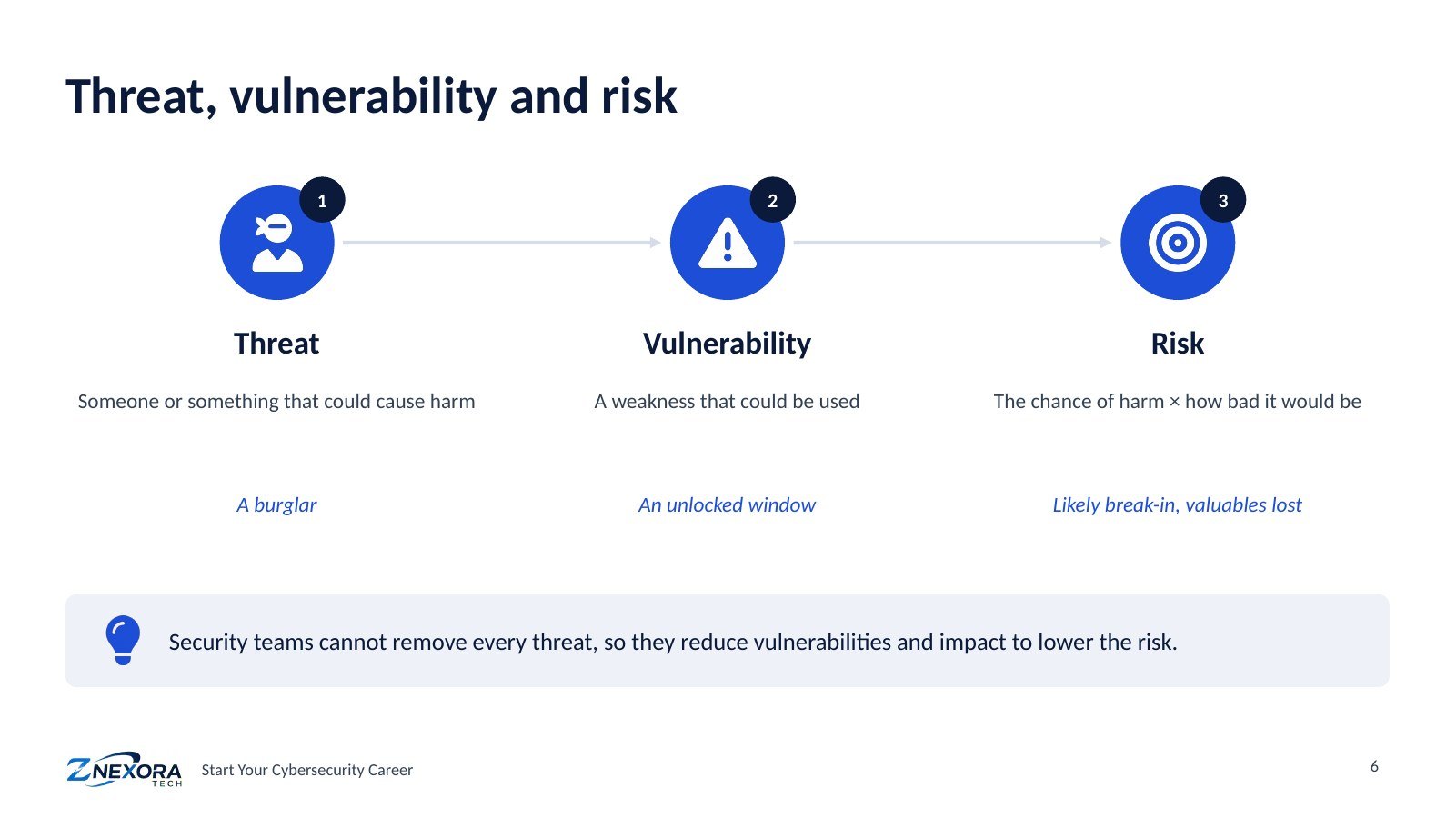
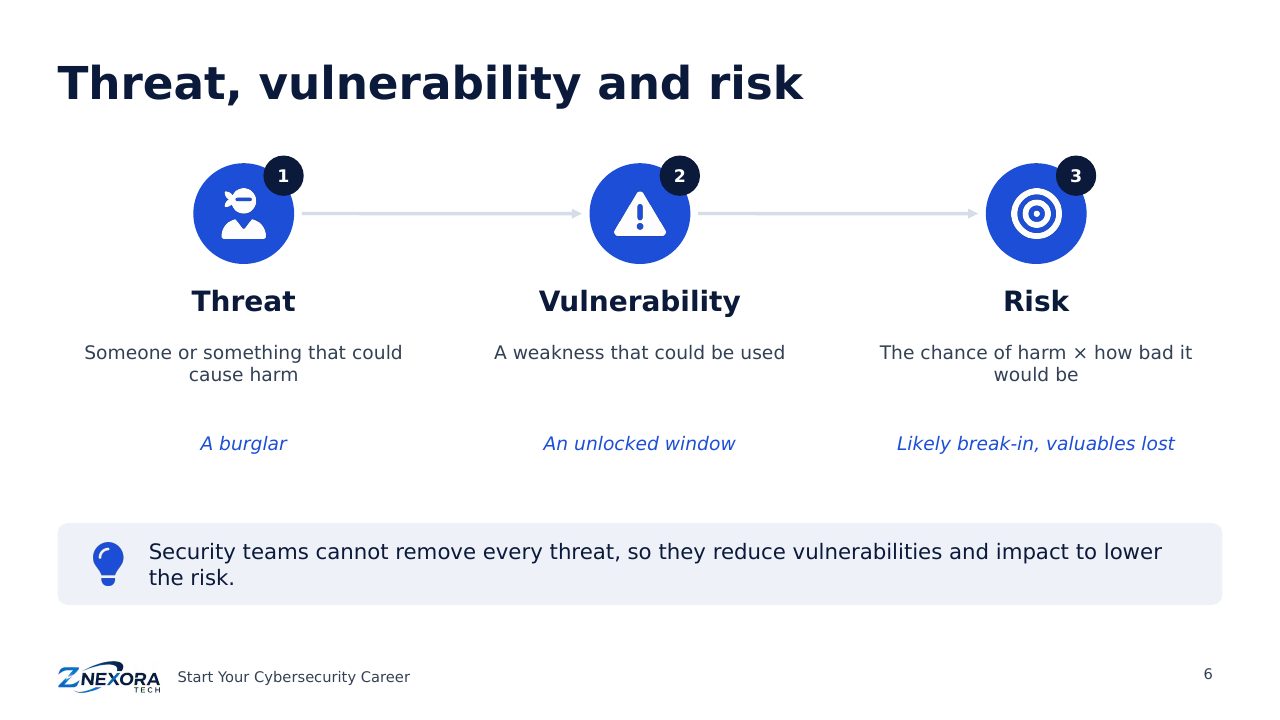
These three words are used constantly, and they mean different things:
- Threat: someone or something that could cause harm, such as a criminal group or a flood.
- Vulnerability: a weakness that could be used, such as unpatched software or a weak password.
- Risk: the chance that harm happens, combined with how bad it would be.
Think of a house. A burglar is the threat, an unlocked window is the vulnerability, and the risk is how likely a break-in is and what could be lost. You cannot remove every burglar from the world, but you can lock the window and keep valuables in a safe. Security teams work the same way: they reduce vulnerabilities and impact to bring risk down to an acceptable level.
Who attacks, and why
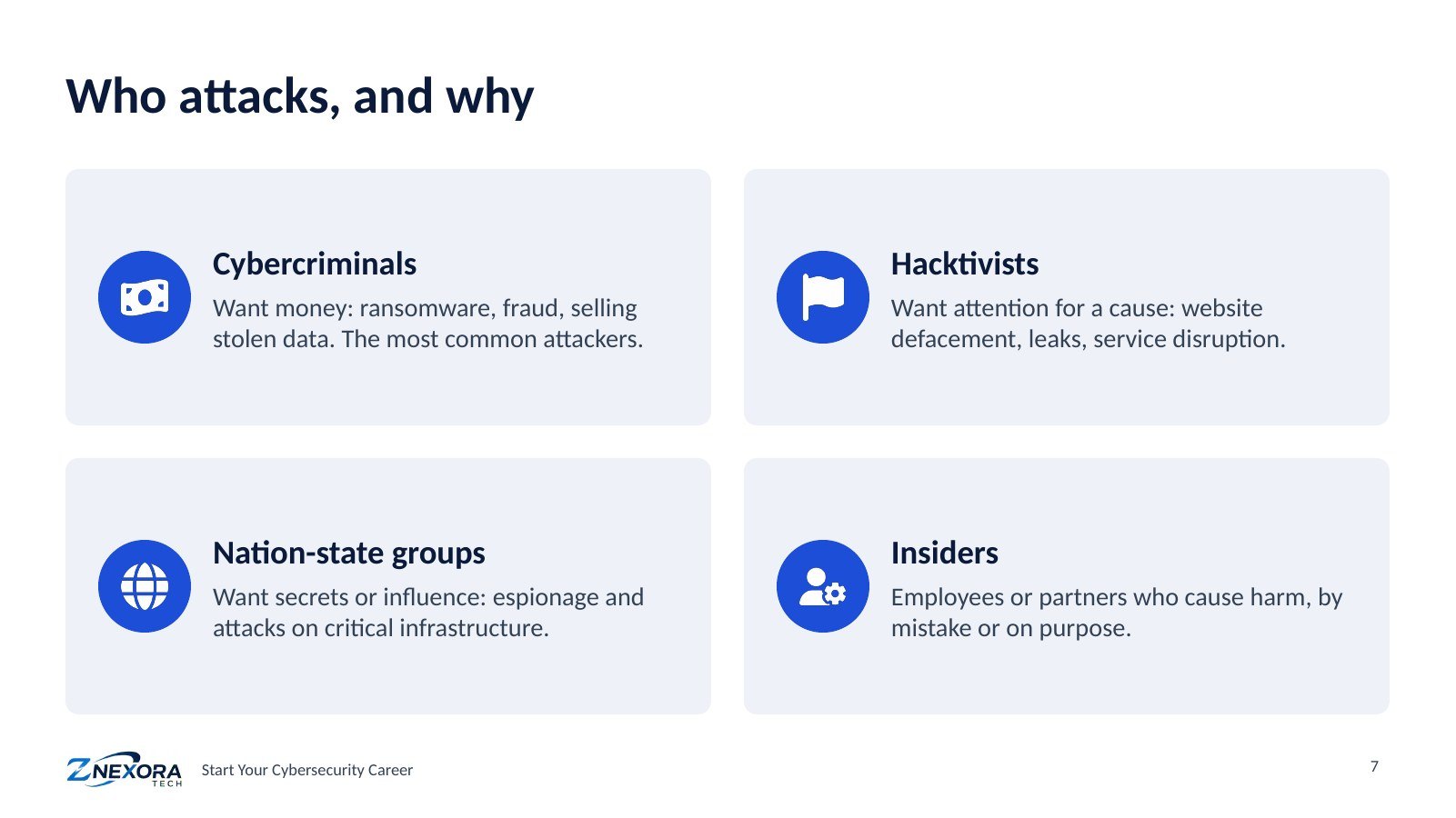
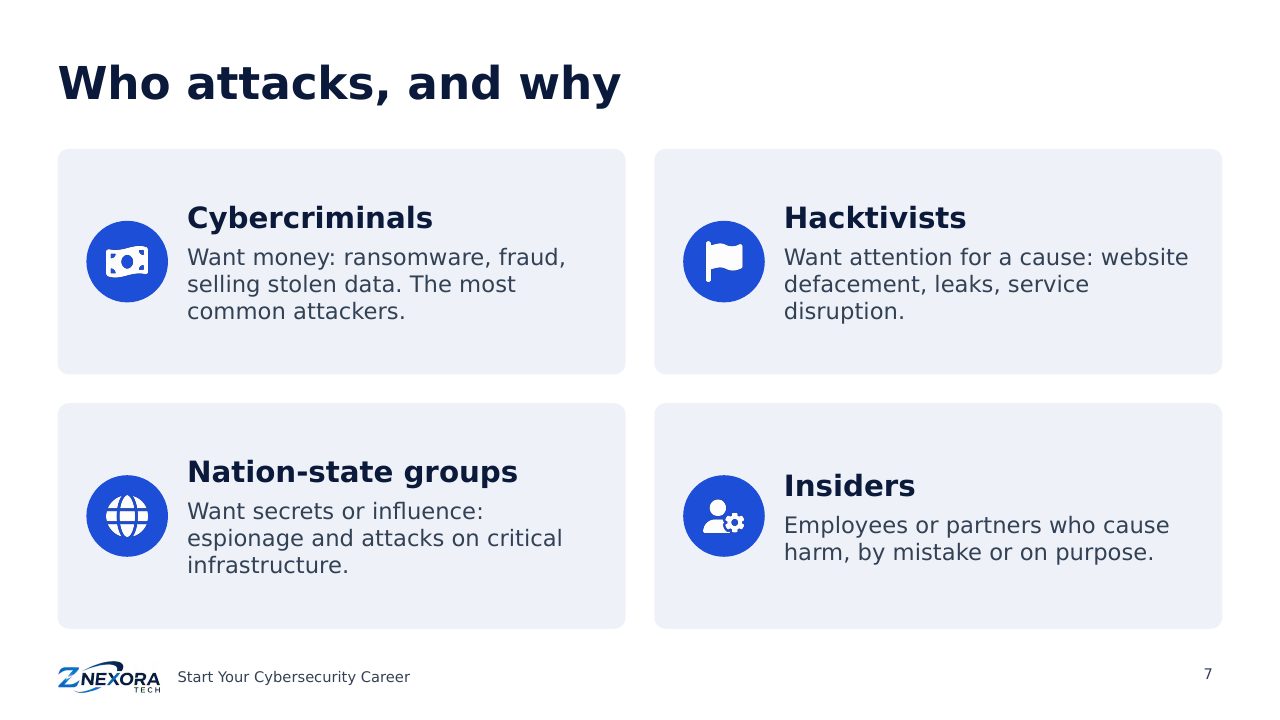
Understanding attackers’ motives helps you predict what they will do:
- Cybercriminals want money, through ransomware, fraud or selling stolen data. They are the most common attackers.
- Hacktivists want attention for a cause, often by defacing websites, leaking documents or disrupting services.
- Nation-state groups want secrets or influence, through espionage and attacks on critical infrastructure.
- Insiders are employees or partners who cause harm, sometimes on purpose, but more often by mistake.
Common myths
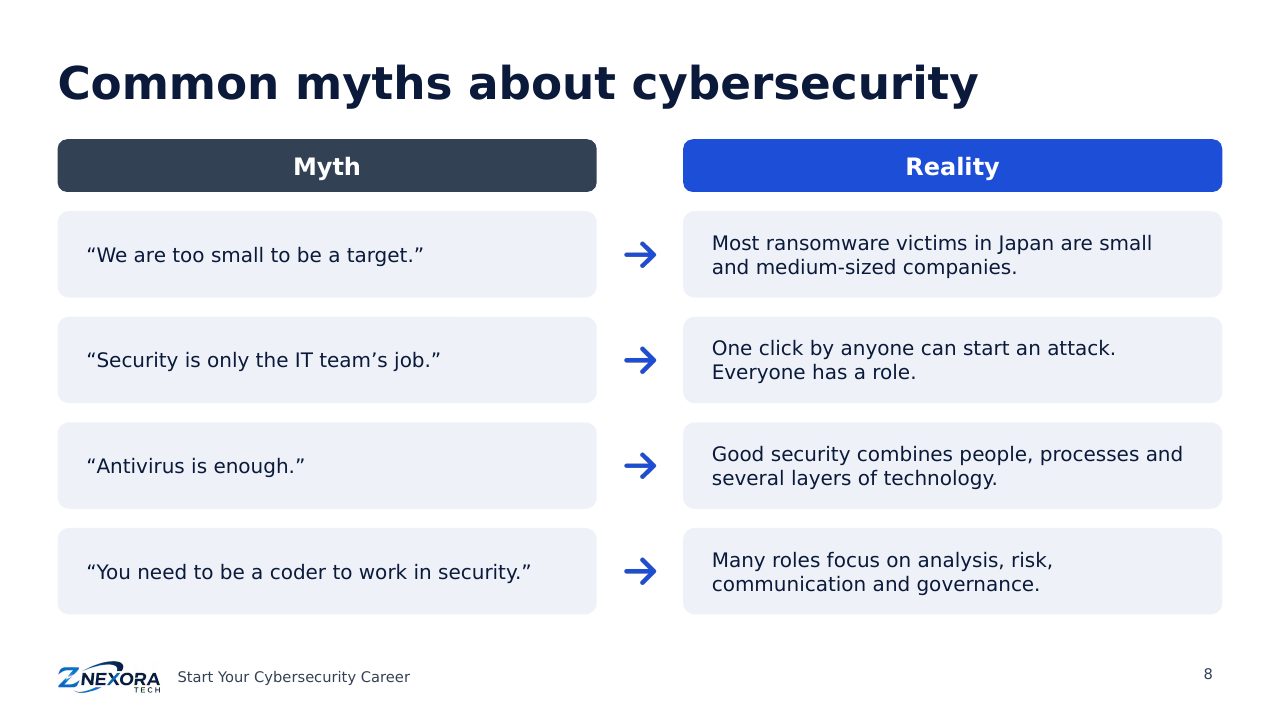
- “We are too small to be a target.” Most ransomware victims in Japan are small and medium-sized companies, because they often have fewer defences.
- “Security is only the IT team’s job.” One click on a phishing email by anyone can start an attack.
- “Antivirus is enough.” Good security combines people, processes and several layers of technology.
- “You must be a coder.” Many security roles focus on analysis, risk, communication and governance.
Quick check
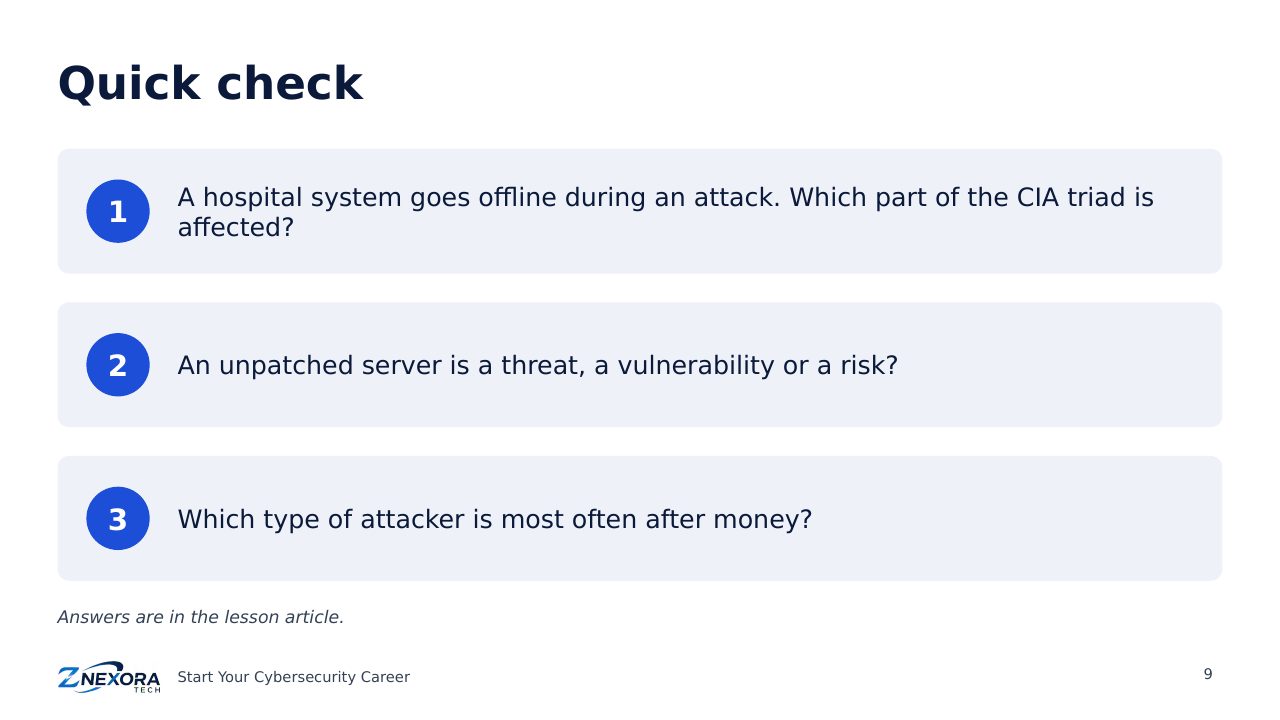
- A hospital system goes offline during an attack. Which part of the CIA triad is affected?
- Is an unpatched server a threat, a vulnerability or a risk?
- Which type of attacker is most often after money?
Answers: 1. Availability. 2. A vulnerability. 3. Cybercriminals.
Key takeaways
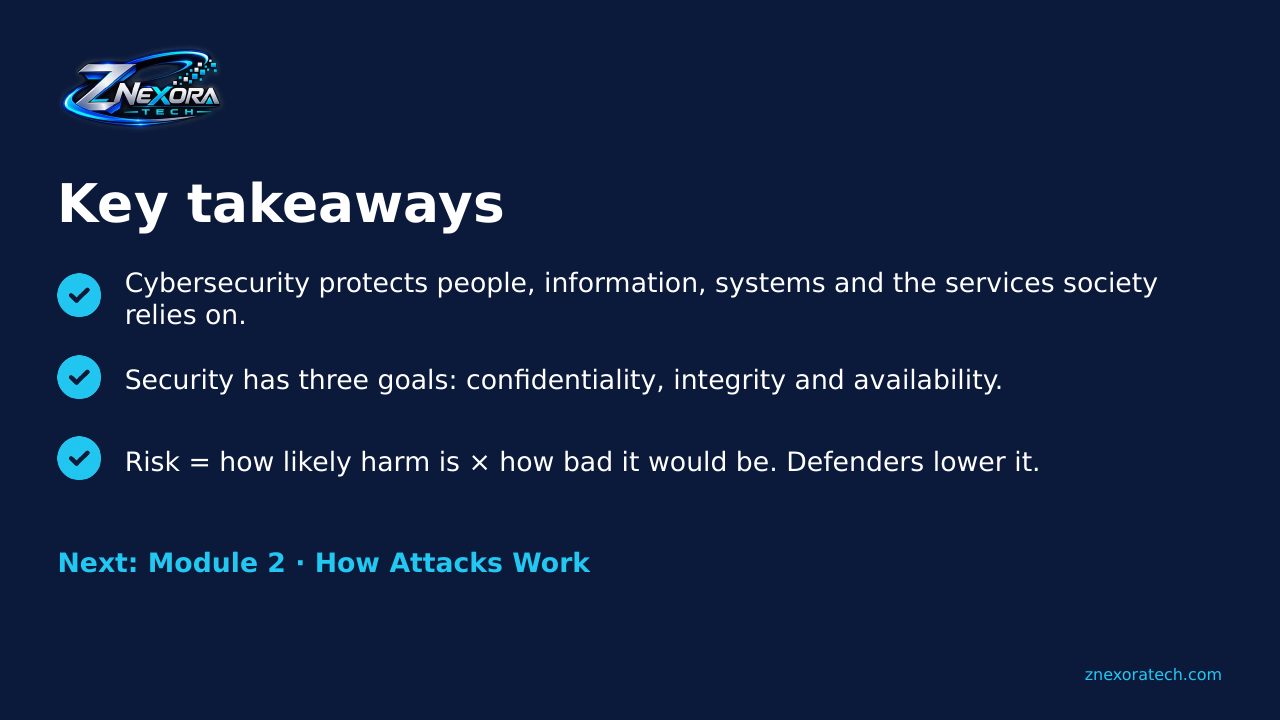
- Cybersecurity protects people, information, systems and services.
- Its three goals are confidentiality, integrity and availability.
- Risk combines how likely harm is with how bad it would be; defenders work to lower it.
Next: Module 2 · How Attacks Work. You will learn how phishing, malware, ransomware and web attacks actually unfold, step by step.
Slides
Thank you for reading!
Let’s continue to build a safer and more trustworthy digital future together.
Follow ZNexora Tech
Stay curious. Stay secure. Stay ahead.